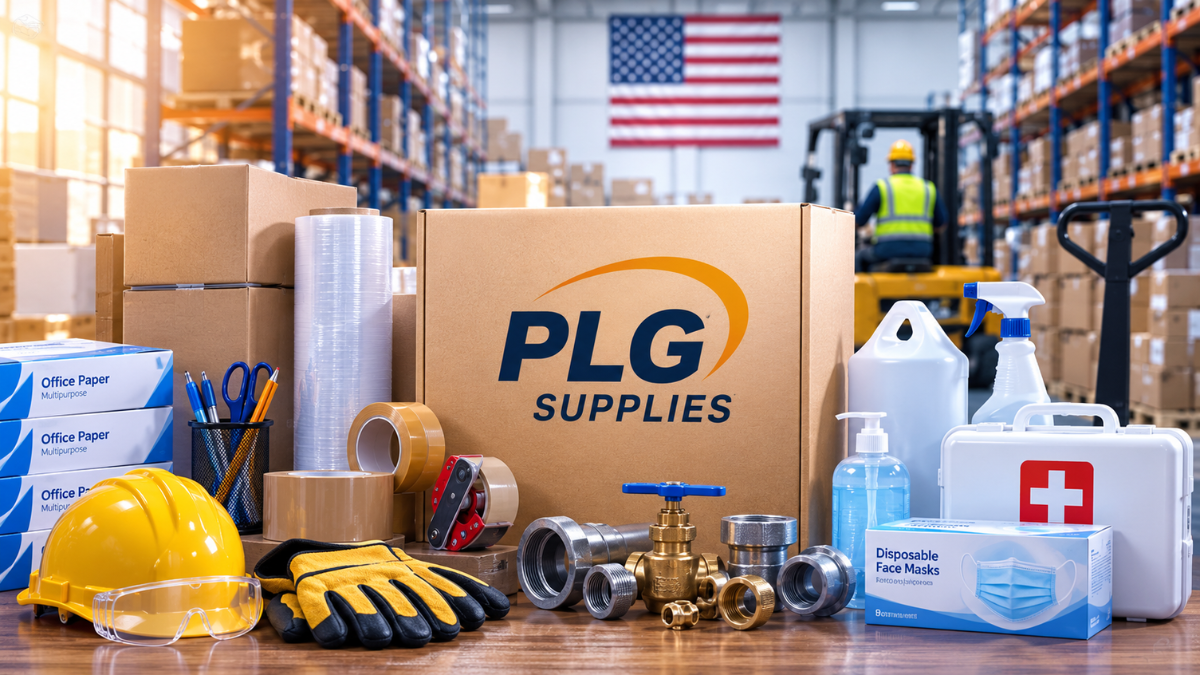
PLG Supplies is a U.S.-focused B2B wholesale distributor offering industrial, office, packaging, logistics, plumbing, gas, medical, and workplace safety products. The company is designed for organizations that want to centralize routine purchasing, request bulk pricing, and source several operational product categories through one supplier.
This makes PLG Supplies potentially useful for procurement teams, facility managers, warehouse operators, healthcare administrators, contractors, schools, and businesses managing multiple locations. However, buyers should still verify product specifications, availability, compliance documentation, delivery terms, and return conditions before placing a large or technical order.
What Is PLG Supplies?
PLG Supplies Ltd. presents itself as a multi-category wholesale business serving commercial and institutional customers in the United States. It operates as a distributor rather than a manufacturer, which means it sources and supplies products produced by other companies.
The brand should not be confused with “product-led growth,” a software marketing concept that sometimes appears in search results for the abbreviation PLG. In this context, PLG Supplies refers to the wholesale supply company and its business procurement services.
The company’s main purpose is to make indirect procurement easier. Indirect procurement covers the tools, materials, equipment, and consumables a company needs to operate but does not normally resell to its own customers. Examples include safety gloves, printer paper, packaging tape, cleaning products, shipping boxes, valves, and first-aid supplies.
Why Reliable Business Supplies Matter
Routine products can become operationally critical when they are unavailable. A warehouse may struggle to ship orders without stretch wrap and labels. A maintenance team may lose valuable time while waiting for a compatible fitting. A medical facility may need protective products and disinfecting supplies without unnecessary delays.
The lowest product price is therefore not always the best purchasing decision. Businesses must also consider stock availability, shipping charges, packaging quantities, lead times, order accuracy, warranty support, technical documentation, and return restrictions.
A reliable business supply distributor can reduce administrative work by combining several purchasing categories. Instead of communicating with separate office, packaging, safety, and maintenance vendors, a procurement team may be able to request one quote, manage fewer invoices, and maintain a simpler reorder process.
Who Does PLG Supplies Serve?
PLG Supplies primarily targets B2B customers rather than individual household buyers. Its potential customer base includes manufacturing companies, hospitals, clinics, schools, warehouses, third-party logistics providers, construction firms, maintenance companies, government contractors, commercial buildings, and corporate offices.
Manufacturing businesses may use the supplier for maintenance tools, machinery accessories, cleaning materials, workplace safety products, and office essentials. Warehouse and 3PL teams may need cartons, pallet protection, shipping labels, stretch film, tape, and other logistics materials.
Healthcare facilities may require disposable protective products, first-aid materials, sanitation supplies, thermometers, or related equipment. Construction and property maintenance companies may need tools, pipes, fittings, valves, regulators, protective equipment, and cleaning products.
Schools, offices, and commercial properties often have mixed purchasing requirements. They may need paper products, furniture, storage systems, hygiene supplies, janitorial materials, and basic maintenance equipment through the same business account.
What Products Does PLG Supplies Offer?
The PLG Supplies product range is organized around four main areas: industrial and office supplies, packaging and logistics materials, plumbing and gas equipment, and medical and safety supplies.
This broad structure allows businesses to combine products used by different departments. A warehouse operator, for example, could potentially source packaging materials, safety gloves, cleaning supplies, office paper, and maintenance tools through one wholesale distributor.
The practical limitation is that a broad category does not confirm whether a specific manufacturer, model, size, grade, or technical configuration is available. Buyers should request exact product details before treating a general category description as confirmation of stock.
Industrial and Office Supplies from PLG Supplies
Industrial and office supplies support daily operations across factories, warehouses, commercial facilities, and administrative departments. The company’s stated range includes hand tools, power tools, machinery accessories, workplace safety products, cleaning chemicals, janitorial equipment, office furniture, toner, paper, and writing materials.
Maintenance, repair, and operations supplies are often described as MRO supplies. These products support equipment, facilities, and employees rather than becoming part of the final goods a company sells.
For routine purchases, consolidating MRO and office supplies may reduce purchasing time. A facility manager could potentially place one order for safety glasses, cleaning tools, storage products, printer paper, and basic hand tools.
Technical products still require careful checking. Buyers should confirm manufacturer part numbers, materials, dimensions, voltage requirements, equipment compatibility, packaging quantities, and warranty terms before approving an order.
Packaging and Logistics Materials
Packaging materials protect products, stabilize freight, support inventory identification, and help warehouses prepare shipments efficiently. PLG Supplies describes a range that includes corrugated boxes, foam rolls, bubble wrap, polybags, industrial tape, strapping, stretch film, shrink wrap, pallet covers, barcode labels, freight stickers, and shipping tags.
Each material serves a different operational purpose. Corrugated cartons provide structure, while foam and bubble wrap protect fragile products. Stretch film stabilizes pallet loads, and strapping adds reinforcement for heavier shipments. Barcode labels and shipping tags help workers identify, track, and route inventory.
Buyers should compare more than the product name. Important specifications may include box dimensions, wall construction, tape width, adhesive type, film gauge, roll length, label material, printer compatibility, core size, and units per carton.
Ordering the wrong specification can create more expense than the initial saving. A low-cost label that does not work with an existing printer, for example, may cause wasted inventory, relabeling work, and delayed shipments.
Plumbing and Gas Equipment
PLG Supplies also markets plumbing and gas products for commercial, industrial, and maintenance applications. Its stated selection includes PVC, CPVC, copper, and PEX pipes, along with valves, elbows, reducers, unions, flow regulators, water meters, faucets, drainage components, gas regulators, hoses, and connection kits.
These products require precise selection. Pipe material alone does not determine whether an item is suitable. Buyers may also need to specify diameter, schedule, pressure rating, temperature range, connection type, media, installation environment, and local code requirements.
Compliance should be verified at the individual product level. ASTM specifications, ANSI standards, and ASME codes may apply to different materials, components, pressure systems, and installation conditions. A broad statement that a product is “compliant” is incomplete unless the supplier identifies the exact standard and provides supporting documentation.
For plumbing or gas applications, buyers should request technical data sheets, certificates of conformity, pressure ratings, material information, manufacturer details, and any documentation required by the installer, engineer, inspector, or local authority.
Medical, Hygiene, and Workplace Safety Supplies
The company’s medical and safety category includes disposable masks, gloves, gowns, face shields, PPE kits, first-aid products, antiseptics, alcohol wipes, sanitizers, surface cleaners, thermometers, and selected testing products.
Purchasing these items requires more care than ordering general office supplies. Workplace PPE must match the hazards employees actually face. Size, fit, protective rating, material, task suitability, and employee training can all affect whether the equipment provides adequate protection.
Medical buyers may also need to verify manufacturer information, device classification, lot traceability, expiration dates, storage instructions, and regulatory status. FDA registration or listing should not automatically be interpreted as product approval, clearance, or authorization.
Terms such as “medical grade” should only appear when the seller can provide evidence supporting the designation. Hospitals, clinics, and institutional buyers should request the exact product documentation required by their internal purchasing and compliance procedures.
Why Businesses Consider PLG Supplies
The main benefit of working with a multi-category supplier is procurement consolidation. A business may be able to reduce the number of vendor accounts, invoices, purchase orders, and support contacts it manages.
PLG Supplies promotes wholesale pricing, custom quotes, bulk orders, recurring shipments, custom sourcing, and support for larger purchasing programs. These services may be valuable for organizations with predictable demand or several facilities purchasing similar products.
A business account may also support more consistent ordering. Approved product lists, saved preferences, recurring quantities, and centralized purchasing can help departments avoid unnecessary substitutions and unauthorized purchases.
However, buyers should confirm account requirements, payment options, minimum quantities, credit approval, tax documentation, freight charges, and quote expiration before assuming that every order will qualify for the same commercial terms.
PLG Supplies vs. Managing Multiple Vendors
Using one supplier for several product categories can reduce administrative work. Procurement teams may spend less time onboarding vendors, processing separate invoices, reconciling payments, and communicating with different account representatives.
The conventional view is that reducing the number of suppliers automatically improves procurement. In reality, excessive consolidation can create a different risk: dependency on one company.
If a single distributor experiences a stock shortage, delivery problem, pricing change, or service failure, several departments may be affected at the same time. A broad supplier may also lack the technical depth of a specialist medical, plumbing, gas, or industrial distributor.
A more practical approach is to classify purchases by risk. Routine office, cleaning, packaging, and general maintenance products may be suitable for consolidation. Highly engineered, regulated, safety-critical, or difficult-to-replace products may require a specialist supplier or an approved secondary source.
The goal should not be to have the smallest possible vendor list. The goal should be to remove unnecessary complexity without weakening product availability, technical support, compliance, or business continuity.
How Ordering from PLG Supplies Works
A business can begin by identifying the products it needs and preparing a detailed purchasing request. For a simple order, this may involve the product name, quantity, packaging unit, delivery address, and required arrival date.
A stronger wholesale quote request should also include the manufacturer, item number, material, dimensions, applicable standard, acceptable alternatives, and destination ZIP code. The buyer should clearly state whether substitutions are allowed.
After receiving a quote, the procurement team should compare the complete delivered cost rather than the unit price alone. Freight charges, taxes, minimum quantities, payment terms, split shipments, return eligibility, warranty handling, and lead times may substantially affect the final value.
Once approved, the order can move through fulfillment, shipment tracking, receiving inspection, invoice reconciliation, and reordering. Businesses should record supplier performance after delivery instead of evaluating the relationship only at the quotation stage.
Custom Sourcing and Large-Scale Procurement
Custom sourcing may help when a standard catalog item does not meet a buyer’s requirements. PLG Supplies states that it can work with manufacturers to locate or arrange specialty products for business customers.
Before approving a custom-sourced product, the buyer should confirm specifications, samples, minimum quantities, production lead times, cancellation terms, intellectual property requirements, quality controls, and return restrictions.
Multi-location procurement requires additional planning. Organizations should define approved products, shipping addresses, purchasing permissions, substitutions, recurring quantities, reporting requirements, and escalation procedures.
Recurring shipment programs can reduce the risk of stockouts, but they also require maintenance. Demand changes over time, so quantities and delivery schedules should be reviewed regularly to prevent excess inventory and unnecessary spending.
PLG Supplies Shipping and U.S. Delivery
PLG Supplies markets its services to business customers across the United States. Standard parcel delivery may suit smaller orders, while heavy, oversized, or high-volume shipments may require freight or pallet coordination.
Delivery estimates should be confirmed for each order. Buyers need to understand whether a date refers to the expected ship date or the expected arrival date, whether all items will ship together, and whether the order includes backordered products.
Freight orders may require a loading dock, delivery appointment, forklift, liftgate, or unloading support. These requirements should be discussed before the shipment leaves the warehouse because additional services can affect both cost and delivery time.
Receiving teams should inspect every shipment promptly. They should compare package counts, item numbers, quantities, specifications, visible damage, lot numbers, and expiration dates with the purchase order and packing documents.
What to Check Before Placing an Order
Before purchasing from PLG Supplies or any wholesale business supplier, confirm the exact product rather than relying on a broad category description. Manufacturer information, dimensions, material, grade, model, pressure rating, package quantity, shelf life, and intended use may all affect suitability.
For technical, medical, gas, plumbing, or safety products, ask for the applicable certification, standard number, technical data sheet, safety data sheet, or manufacturer documentation. Broad claims about quality or compliance should not replace product-specific evidence.
Buyers should also review stock status, expected shipping date, total freight cost, quote validity, payment terms, partial shipment rules, substitution policies, return eligibility, and warranty support.
For an initial order, a smaller and easily verified purchase may provide a practical way to assess communication, order accuracy, packaging, delivery, and issue resolution before committing significant volume.
Get Started with PLG Supplies
Businesses evaluating PLG Supplies should start with a clearly defined purchasing requirement. Identify the products, quantities, specifications, documentation, delivery location, and required timeline before contacting the procurement team.
Routine products may be evaluated through a smaller initial order. Technical or regulated products should only be purchased after the buyer has verified manufacturer information, applicable standards, product compatibility, and supporting documentation.
For recurring or multi-location requirements, the business should establish approved products, service expectations, delivery procedures, reporting needs, and backup supply options before centralizing a large share of its purchasing.
Conclusion
PLG Supplies may be a suitable wholesale procurement partner for U.S. businesses that want to combine industrial, office, packaging, logistics, plumbing, gas, medical, and safety purchasing through one supplier.
Its potential value lies in reducing vendor administration, supporting bulk purchasing, and simplifying access to several operational product categories. That convenience should still be balanced with careful verification of stock, specifications, compliance documents, shipping terms, returns, warranties, and total delivered cost.
Businesses purchasing routine operational supplies may benefit most from consolidation. Organizations buying regulated, highly technical, or safety-critical products should retain specialist expertise and backup suppliers where necessary.
The most practical next step is to prepare a detailed product list, request a written wholesale quote, verify the commercial and technical terms, and test service performance before expanding the relationship.
You May Also Like Fintech com
FAQs
Is PLG Supplies a wholesale distributor?
Yes. PLG Supplies presents itself as a B2B wholesale distributor serving businesses and institutions rather than primarily targeting individual household consumers.
Does PLG Supplies serve small businesses?
The company’s broad B2B positioning may include smaller companies as well as larger organizations. Minimum quantities, account requirements, pricing, and delivery options should be confirmed for the specific order.
Can customers request bulk pricing?
PLG Supplies promotes wholesale quotes and pricing for larger orders. The actual discount may depend on the product, manufacturer, quantity, availability, freight cost, and payment terms.
Does PLG Supplies provide custom product sourcing?
The company states that it can assist with specialty sourcing. Buyers should provide complete technical requirements and confirm minimum quantities, lead times, approval procedures, and return restrictions.
Which industries can order from PLG Supplies?
The supplier targets manufacturing, healthcare, education, construction, logistics, warehousing, commercial facilities, maintenance companies, and other organizations with recurring operational purchasing needs.
Does PLG Supplies ship throughout the United States?
PLG Supplies markets domestic delivery for U.S. business customers. Delivery availability, freight requirements, shipping costs, and estimated arrival times should be confirmed for each destination and order.
Can businesses arrange recurring shipments?
Recurring ordering may be useful for products with predictable consumption, such as packaging, cleaning, office, hygiene, or safety supplies. Buyers should confirm how quantities, schedule changes, cancellations, and substitutions are managed.
What information is needed for a wholesale quote?
A complete request should include the product description, manufacturer or acceptable equivalent, item number, specifications, quantity, packaging unit, delivery ZIP code, required date, and whether substitutions are permitted.

Wyvernity Team is a content writing team with 3 years of experience in creating clear, engaging, and SEO-friendly content for Wyvernity.com.