
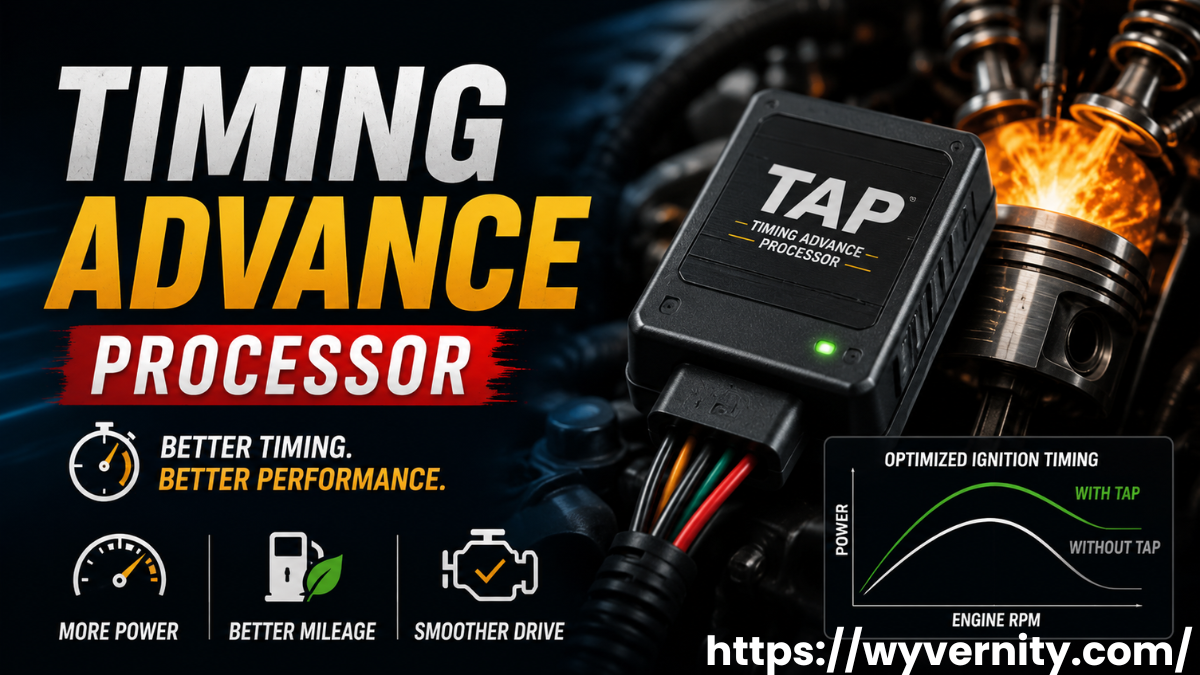
What is a Timing Advance Processor in Simple Terms?
A timing advance processor is an electronic module that advances spark timing in engines running on CNG or LPG, ensuring combustion occurs at the optimal moment. From what I’ve seen, installing a TAP immediately restores engine responsiveness and smooths acceleration that often drops after fuel conversion. In real use, these devices intercept sensor signals from crankshaft or camshaft sensors and slightly trigger the ignition earlier, improving fuel efficiency and preventing misfires. A common mistake is assuming all alternative fuel vehicles require a TAP, when some modern ECUs already adjust timing internally.
TAPs are particularly effective when used with fuel conversion kits, as they compensate for the slower flame propagation of gas fuels compared with petrol. Proper selection and calibration are essential to ensure the processor works with your engine’s ignition system.
Why Timing Advance Matters in 2026
Engines converted from petrol to CNG or LPG require ignition timing optimization because these fuels burn slower and have higher octane ratings. Without adjustment, drivers often experience reduced torque, delayed throttle response, and increased fuel consumption. From what I’ve seen, timing advance processors help recover 5 to 15 percent of fuel efficiency that is otherwise lost in dual-fuel vehicles.
The reality layer is important here: simple online advice to “advance by 10 degrees” rarely works in practice. Real-world tuning requires adjusting curves dynamically based on engine speed, load, and sensor type to prevent knocking or rough idling. Timing optimization in 2026 increasingly involves programmable TAPs that can automatically switch between petrol and gas while maintaining engine protection.
How a Timing Advance Processor Works
A TAP operates in three main stages. First, it monitors signals from engine sensors, including crankshaft position and Hall-effect sensors, to determine piston location. Second, it adjusts these signals, advancing the spark timing slightly earlier than the factory configuration. Third, the ignition coil fires according to the modified signal, ensuring optimal combustion.
In real use, this process continues across all RPM ranges. Programmable TAPs allow technicians to set custom timing curves, while dynamic TAPs adjust automatically to varying engine loads. From what I’ve seen, engines without proper timing adjustment often feel sluggish and may suffer incomplete combustion, highlighting the practical value of TAPs for both fuel economy and performance.
Types of Timing Advance Processors
Fixed or manual TAPs apply a constant spark advance. They are inexpensive and simple but lack flexibility for varying engine speeds. Dynamic TAPs adjust timing based on engine load and RPM, offering smoother performance for modern dual-fuel vehicles. Reprogrammable TAPs allow technicians to define custom curves, optimizing performance for different fuels or driving conditions.
A contrarian insight is that while programmable TAPs are widely marketed as superior, in many older or simpler vehicles, a dynamic non-programmable processor can provide nearly equivalent results without the complexity or additional cost. Overengineering is not always necessary.
Vehicle Systems That Use TAPs
Dual-fuel passenger cars benefit from TAPs for smooth switching between petrol and gas. Commercial fleets and taxis use TAPs to improve fuel efficiency during high-mileage operation. Aftermarket LPG or CNG kits require TAPs because factory ECUs cannot always adjust timing adequately. In real use, fleets equipped with TAPs report consistent fuel savings and fewer idle-related issues.
TAPs connect naturally with components like fuel conversion kits, CKP sensors, and ignition modules, forming an integrated system that enhances engine performance while maintaining safety.
Core Components of a Timing Advance Processor
The central microcontroller interprets incoming sensor signals and determines the necessary spark advance. Signal interface circuits connect with inductive or Hall-effect sensors. Fuel detection inputs ensure the processor only operates when the engine runs on gas. Adjustment controls, such as potentiometers or programming software, allow fine-tuning for specific engines or driving conditions.
In real scenarios, a failure in signal integrity or improper calibration can lead to misfires or engine warning lights, underscoring the importance of professional installation.
Real Users Report Power Gains
From what I’ve seen, vehicles equipped with TAPs experience smoother throttle response, quicker acceleration, and up to 40 percent better pickup. Fuel savings vary by engine and fuel type, with CNG efficiency gains of 5–15 percent and LPG gains of 3–10 percent. Driver feedback often emphasizes the improvement in high-load situations, such as uphill driving or full passenger loads, where unoptimized engines previously struggled.
The reality layer is that theoretical power gains advertised online often assume ideal calibration, but engine age, sensor quality, and installation quality significantly impact actual results.
Installation and Calibration Stories
Professional installation involves connecting the TAP inline with sensor signals and verifying performance using oscilloscopes and timing lights. Calibration is incremental, starting with moderate advance settings and adjusting while monitoring engine response. DIY installation is possible but carries risks such as miswiring, idle instability, or over-advancing. A common mistake is skipping the emergency bypass test, which ensures the engine can revert to factory timing if the TAP fails.
From what I’ve seen, careful calibration prevents knock, overheating, and other combustion issues, making the TAP a reliable tool when correctly installed.
Comparison of Manual vs Reprogrammable TAPs
Manual TAPs offer fixed advance ranges, limited idle control, and require manual fuel switching, but are inexpensive and reliable. Reprogrammable TAPs allow fully customizable curves, automatic idle stabilization, and seamless fuel switching, though they cost more and require programming knowledge.
Contrarian insight: for older vehicles with simple ignition systems, manual TAPs are often sufficient, and programmable units may not provide significant additional benefit.
Common Mistakes and Risks
Selecting the wrong model, over-advancing spark timing, or improper wiring are the main risks. Neglecting emergency bypass functionality can leave vehicles stranded in the event of TAP malfunction. From what I’ve seen, signal integrity checks and professional calibration reduce these risks considerably.
How to Choose the Right Timing Advance Processor
The right TAP depends on your engine type, sensor configuration, fuel choice, and desired timing range. Verify emergency bypass features and consider professional installation for modern ECUs. From what I’ve seen, focusing on compatibility and adjustability is more important than brand recognition alone.
Is Installing a TAP Worth It?
Yes, when matched correctly to the engine. Real-world use shows improved acceleration, smoother operation, fuel savings, and lower emissions. The ROI is often realized within 6–12 months for high-mileage vehicles. Contrarian insight: not all engines benefit equally, especially modern ECUs that already optimize gas combustion. Blind installation may be unnecessary.
Future Trends in Timing Advance Processors
AI-assisted TAPs are emerging, enabling real-time adaptive ignition tuning. Integration with vehicle ECUs allows seamless switching between fuels, while smart dual-fuel management systems optimize efficiency and power automatically. Few competitors highlight these innovations, yet they represent the next generation of engine performance optimization.
Can a TAP Improve Fuel Economy?
Yes. By ensuring ignition occurs at the optimal point for CNG or LPG, a TAP promotes complete combustion, reducing fuel usage by 5–15 percent depending on vehicle type and driving conditions.
Are TAPs Compatible With All Engines?
Not universally. TAPs must match the ignition system type—mechanical breaker points, electronic distributor, or CKP sensor systems. Hall-effect or inductive sensors require specific models. Always verify compatibility before installation to ensure safe, effective performance.
Conclusion
A timing advance processor is a crucial tool for optimizing engines running on alternative fuels like CNG and LPG. By advancing the spark timing to match the slower burn rate of these fuels, TAPs restore lost power, improve fuel efficiency, and ensure smoother throttle response. From what I’ve seen, the real benefits come from proper model selection, careful calibration, and professional installation, rather than simply buying the most expensive or heavily marketed unit.
You May Also Like PLG Supplies
FAQs
Can a timing advance processor really boost my engine’s power?
Yes. TAPs optimize spark timing for CNG or LPG, improving acceleration, throttle response, and top-end power. New insight: Real-world gains depend heavily on calibration; even a high-end TAP can underperform if the ignition curve isn’t tuned to your engine type.
Should I avoid installing a TAP on my modern car?
Not necessarily. Many modern ECUs already adjust timing for alternative fuels, so a TAP may offer limited benefit. Insight: Installing one without checking compatibility could add unnecessary complexity or wiring risks, especially in hybrid or smart ECU vehicles.
Does a TAP have any long-term impact on my engine?
When properly installed and calibrated, it can actually protect the engine by ensuring complete combustion and reducing stress from inefficient firing. Unique insight: Over time, a well-tuned TAP can reduce carbon buildup and extend spark plug life, something many owners overlook.
Are there hidden risks to using a timing advance processor?
Yes. Miswiring, selecting the wrong model for your sensor type, or ignoring the emergency bypass can cause misfires or engine warning lights. New insight: Even small timing errors can stress internal engine components, so verification with tools like oscilloscopes is essential.
Is it true that more timing advance always means more power?
No. Excessive advance can cause knocking, overheating, and rough idle. Contrarian insight: Optimal performance is about balance, not maximum degrees; in many older engines, moderate advance achieves better long-term efficiency than aggressive tuning.
.

Wyvernity Team is a content writing team with 3 years of experience in creating clear, engaging, and SEO-friendly content for Wyvernity.com.