
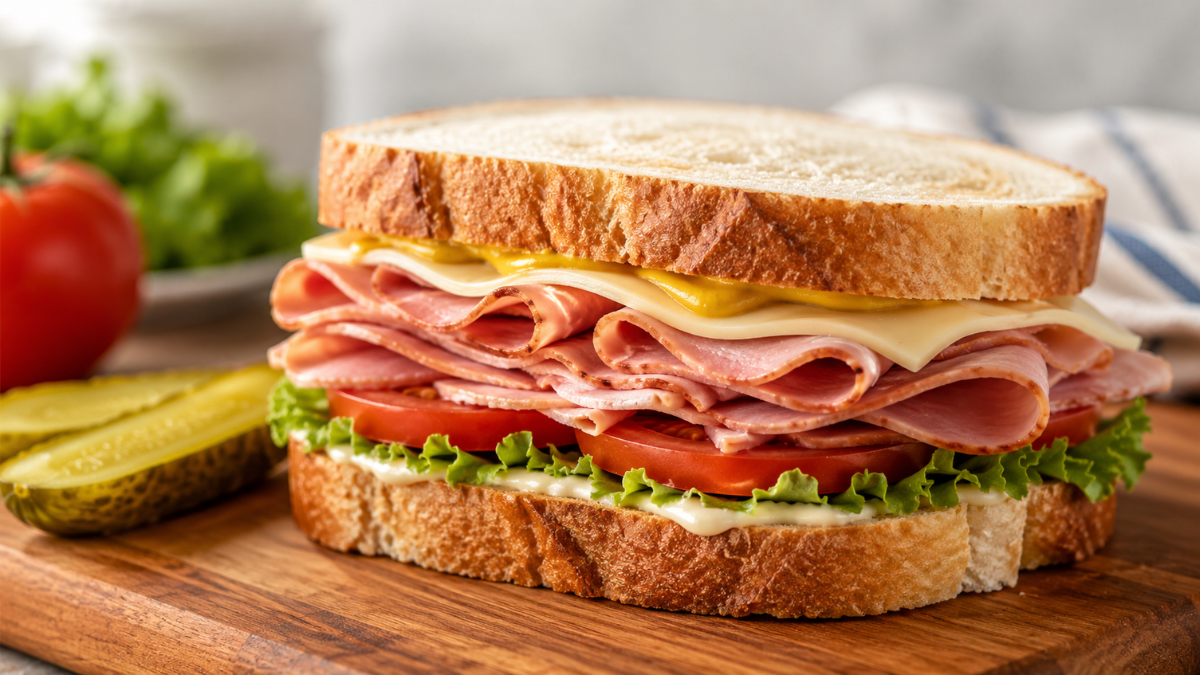
A great ham sandwich needs more than ham between two pieces of bread. The most reliable formula combines bread that can support the filling, thinly layered ham, enough richness to prevent dryness, and something tangy or fresh to balance the savory flavors.
You can keep it cold for a five-minute lunch or grill it until the bread is crisp and the cheese melts. Neither version is automatically better. The right choice depends on how soon you plan to eat it, the ingredients you have and whether you want fresh crunch or a warm, toasted finish.
What Makes a Great Ham Sandwich?
Balance the bread, ham, cheese and spreads
The best place to start is not with a long ingredient list but with balance.
Ham supplies the main savory and salty flavor. Bread gives the sandwich structure. Mayonnaise or cheese contributes richness, while Dijon mustard, pickles or another acidic ingredient cuts through that richness. Lettuce, tomato or another vegetable can bring freshness and texture.
A useful formula is savory ham + suitable bread + a creamy element + a tangy element + optional freshness or crunch.
Not every sandwich needs all five. Ham, Swiss cheese and mustard can be enough when the proportions are right.
Choose cold or grilled according to the result you want
A cold sandwich emphasizes soft bread, sliced ham and crisp toppings. It is fast to assemble and easier to prepare for a packed lunch.
A grilled ham and cheese sandwich has a different purpose. Toasting adds a crisp exterior, while warming the filling softens or melts the cheese. Fresh lettuce is generally better kept out of the skillet and added afterward if you still want it.
Think about the eating situation before deciding how to build the sandwich. A tomato-heavy sandwich eaten immediately has different needs from one that will sit in a lunchbox for several hours.
Ingredient quality matters more when the recipe is simple
A simple sandwich gives each ingredient a noticeable role. That does not mean buying the most expensive bread, ham or cheese. It means choosing ingredients you enjoy and making sure they work together.
Bread, ham and moisture balance have the greatest impact. Specialty toppings and elaborate flavored spreads are secondary improvements.
Best Ingredients for a Classic Ham Sandwich
What type of ham works best?
Thinly sliced deli ham is the easiest everyday choice because it folds and distributes evenly across the bread. Smoked ham gives the sandwich a deeper savory character, while honey ham adds sweetness. Black Forest-style ham can bring both smoky and mildly sweet notes.
Leftover cooked ham also works well. Slice it fairly thinly rather than placing one thick slab between the bread. Thin pieces are easier to distribute and bite through.
Instead of treating one variety as universally best, match the rest of the sandwich to the ham. A sweeter ham can benefit from the sharpness of Dijon mustard or pickles. A strongly smoked ham may need fewer competing flavors.
The best bread depends on the filling
Sourdough is a good choice when you want chew and enough structure to hold a generous filling. Whole-wheat and seeded breads create a heartier sandwich, while soft white or wheat sandwich bread keeps the texture tender.
The amount of filling should influence the bread choice. Thin, soft bread can handle a simple ham-and-mustard sandwich, but a sandwich loaded with ham, cheese, tomato and pickles benefits from something sturdier.
For grilling, choose bread that can develop a crisp exterior while remaining pleasant to bite once toasted.
Which cheese pairs well with ham?
Swiss is a classic pairing because its mild, nutty character complements ham without dominating it. Cheddar gives the sandwich a sharper flavor, while smoked cheddar reinforces smoky notes.
Gruyère provides a richer, nuttier character and works especially well when warmed. Havarti, provolone and Muenster offer milder, creamy alternatives.
There is no single cheese that is always best. A mild ham can handle a stronger cheese, while a bold, salty or heavily smoked ham often benefits from something less assertive.
Cheese is also optional. A ham sandwich can be complete without it when the spread and toppings provide enough moisture and contrast.
Mayonnaise, Dijon mustard and other spreads
Mayonnaise adds creaminess and helps prevent a sandwich from tasting dry. Dijon mustard brings sharpness and acidity that can balance rich ham and cheese.
Using both is an easy starting point.
For a sweeter variation, combine mustard with a small amount of honey. Garlic or finely chopped herbs can also be mixed into mayonnaise when you want a more flavorful spread.
Spread condiments evenly and use enough to moisten the sandwich without saturating the bread.
Lettuce, tomato, pickles and other toppings
Lettuce provides crispness with relatively little added moisture. Tomato contributes freshness and juiciness, making it particularly good in a sandwich that will be eaten soon after assembly.
Pickles offer both acidity and crunch, which makes them especially useful alongside ham and cheese.
Thinly sliced red onion, cabbage, spinach, watercress and arugula can also work. Rather than adding toppings simply because they are available, ask what the sandwich needs. If it is already rich, acidity or freshness may help more than another creamy ingredient.
Easy Ham Sandwich Recipe
Ingredients
For one sandwich, use two slices of sourdough, seeded or sturdy sandwich bread, about 3 ounces of thinly sliced ham, two slices of Swiss, cheddar or Gruyère, one tablespoon mayonnaise and one teaspoon Dijon mustard.
Add four or five thin pickle slices if you like a tangy crunch. Lettuce and thin tomato slices are optional for a cold version.
For a grilled sandwich, have about one tablespoon of softened butter available for the outside of the bread.
Preparation time and serving size
The cold version takes about five minutes and makes one sandwich.
A grilled version generally needs several additional minutes, but exact cooking time will vary with the thickness of the bread and cheese and the heat of the skillet. Visual cues are therefore more useful than relying on the timer alone.
Equipment
A knife, cutting board and plate are enough for the cold version.
For a grilled ham and cheese sandwich, you will also need a skillet and spatula. A second small skillet or another heat-safe weight can be used for light pressing, but it is optional.
How to Make a Ham Sandwich
Prepare the bread and spreads
Lay the bread slices on a clean work surface. Spread mayonnaise evenly over the inside surfaces and add Dijon mustard to one side.
Distributing the spread across the bread instead of leaving it concentrated in the center gives the sandwich more consistent flavor and moisture from edge to edge.
Layer the cheese and ham
Place a slice of cheese on the bottom piece of bread if you are using cheese.
Loosely fold or arrange the ham across the bread rather than compressing it into one dense stack. This distributes the filling and creates a more comfortable bite.
Add the second cheese slice above the ham if desired.
Add pickles or fresh toppings
Place pickles over the ham for acidity and crunch.
If you are eating the sandwich immediately, add lettuce and thin tomato slices now. Very juicy tomato can be lightly patted on the surface before it goes into the sandwich to reduce unnecessary moisture.
Close the sandwich
Place the second slice of bread over the filling and press gently.
If the filling immediately spills from every side or makes the sandwich difficult to hold, remove some rather than crushing everything together. More filling does not necessarily produce a more balanced sandwich.
Slice and serve
Cut the sandwich in half and serve it immediately if you are keeping it cold.
If you plan to pack it for later, moisture management and refrigeration become more important, especially when using cheese, deli meat and fresh vegetables.
How to Make a Grilled Ham and Cheese Sandwich
Butter the exterior evenly
Build the sandwich without lettuce or raw tomato. Spread a thin, even layer of softened butter over both exterior bread surfaces.
The goal is enough butter to help create an evenly toasted exterior, not so much that the bread becomes greasy.
Use moderate skillet heat
Heat a skillet over medium-low to medium heat.
High heat may brown the outside quickly while the center remains comparatively cool. Moderate heat gives the sandwich more time to warm while the bread develops its crust.
Cook until golden, then turn
Place the sandwich in the skillet and cook until the bottom is evenly golden. Depending on your bread, pan and heat level, this may take roughly three to four minutes.
Turn the sandwich carefully and cook the other side until it is golden and the cheese has softened or melted to your liking.
Rather than following the clock blindly, watch for an evenly toasted exterior and a thoroughly warmed filling.
Melt the cheese without burning the bread
If the bread is becoming dark before the cheese melts, reduce the heat instead of continuing at the same temperature.
Briefly covering the skillet can retain heat around the sandwich and help warm the center. You can also press gently with a spatula or a second skillet to improve contact with the pan.
Avoid pressing aggressively because melted filling can be squeezed from the bread.
Cold Ham Sandwich vs. Hot Ham and Cheese Sandwich
A cold ham sandwich is the practical choice when speed, fresh toppings or portability matter most. It works especially well with lettuce, tomato, pickles and soft or hearty sandwich bread.
A hot ham and cheese sandwich prioritizes texture. The bread becomes crisp and the cheese becomes soft or melted, producing a richer result that is usually at its best shortly after cooking.
For an everyday packed lunch, the cold version is generally easier to manage. For a meal you are about to eat and where melted cheese is the priority, grilling is worth the extra step.
Ham Sandwich Variations Worth Trying
Ham and Swiss
Pair thinly sliced ham with Swiss cheese, mayonnaise and Dijon mustard. Add pickles if you want more acidity and crunch.
The mild cheese allows the ham to remain the dominant flavor.
Ham and smoked cheddar
Smoked cheddar creates a more assertive sandwich. Because both ham and smoked cheese can have strong savory flavors, keep the other additions simple.
A little mustard or crisp lettuce may be enough.
Ham, cheese and pickle
This combination works because the pickle introduces both acidity and texture against soft ham and creamy cheese.
It can be served cold or grilled. For grilling, drain the pickle slices well before adding them so unnecessary liquid does not reach the bread.
Ham with lettuce and tomato
Lettuce and tomato make a simple cold sandwich feel fresher. Crisp lettuce contrasts with the soft ham, while tomato adds juiciness.
This version is best when eaten soon after assembly. If it must travel, consider keeping the tomato separate until serving.
Honey-mustard ham sandwich
Combine Dijon mustard with a small amount of honey for a sweet-and-tangy spread.
The aim is contrast rather than sweetness dominating the sandwich. It can work particularly well with salty or smoky ham.
Hot ham and provolone with herbs
Use a sturdy roll or crusty bread with thin ham and provolone. A small amount of olive oil, vinegar and dried or fresh herbs can take the flavor in an Italian-inspired direction.
Heat it until the cheese softens and serve while warm.
How to Customize a Ham Sandwich Without Overcomplicating It
Changing the bread often makes a bigger practical difference than piling on extra toppings. Soft sandwich bread creates a tender bite, while sourdough or a sturdy roll gives a heavier filling more support.
Use cheese to adjust intensity. Swiss keeps the sandwich mild, cheddar makes it sharper and Gruyère makes a grilled version richer.
Choose vegetables according to function. Lettuce or cabbage adds crunch. Arugula brings pepperiness. Tomato contributes moisture and freshness. Pickles bring crunch and acidity.
Flavored mayonnaise, honey mustard and specialty condiments can add variety, but they are supporting choices. Get the bread, ham and moisture balance right first.
Common Ham Sandwich Mistakes and How to Avoid Them
Using ham that is too thick
A thick slab of leftover ham can make the sandwich difficult to bite cleanly.
Slice leftover ham into thinner pieces when possible and distribute them across the bread rather than building one dense center.
Adding too many wet ingredients
Extra mayonnaise, undrained pickles, juicy tomatoes and other wet toppings can soften the bread.
Use spreads in moderation, drain pickled ingredients and control excess surface moisture from vegetables when the sandwich will not be eaten immediately.
Overloading the sandwich
A taller sandwich is not automatically a better one.
When too much ham, cheese and produce are stacked together, individual ingredients can stop working as one balanced bite. The sandwich may also become difficult to hold.
Start with the core ingredients, then add toppings only when they contribute something useful.
Cooking over excessively high heat
A dark exterior does not necessarily mean the filling is ready.
If the bread is browning faster than the center is warming, turn down the heat. Moderate cooking gives the interior more time to warm without sacrificing the crust.
Blaming tomato instead of managing moisture
Tomato is not inherently a poor sandwich topping. The problem is prolonged contact between juicy tomato and absorbent bread.
For an immediate meal, fresh tomato works well. For a make-ahead sandwich, placing it toward the center of the filling or packing it separately can help preserve the bread’s texture.
What to Serve With a Ham Sandwich
The best side depends on how substantial the sandwich already is.
A rich grilled ham and cheese sandwich pairs naturally with something lighter or sharper, such as a green salad, pickles or a vegetable-based soup.
A simpler cold sandwich can support a more substantial side such as chips, roasted potatoes or fries.
Soup can turn a sandwich into a fuller meal. Tomato soup works particularly well with a rich cheese-filled sandwich because its acidity provides contrast.
A simple decision rule is to serve what the sandwich lacks. Pair a heavy sandwich with something fresh and a light sandwich with something more substantial.
Can You Make a Ham Sandwich Ahead of Time?
Yes, but a sandwich being eaten tomorrow should not always be assembled exactly like one being eaten in five minutes.
Prevent soggy bread
Control the amount of spread, drain wet ingredients and avoid leaving especially juicy fillings directly against absorbent bread for long periods.
Sturdier breads also tend to tolerate heavier fillings better than very soft slices.
Pack tomatoes and other wet toppings carefully
If practical, keep sliced tomato in a separate container and add it shortly before eating.
When the sandwich must be completely assembled, position wetter toppings toward the middle, separated from the bread by less absorbent ingredients.
Keep ham sandwiches properly chilled
Deli ham and other perishable sandwich ingredients require refrigeration. FoodSafety.gov currently lists opened packages of luncheon meat and deli-sliced luncheon meat for 3 to 5 days in a refrigerator at 40°F (4°C) or below.
That refrigerator range describes the luncheon meat itself. An assembled sandwich may lose texture sooner because bread, spreads and vegetables change as they sit.
For a packed lunch containing deli meat or other perishable ingredients, USDA guidance says perishable food should not remain at room temperature for more than two hours, or more than one hour when the temperature is above 90°F (32.2°C). USDA also recommends keeping perishable packed lunches cold.
These are U.S. food-safety recommendations. If you are outside the United States, follow your national food-safety authority where local guidance differs.
Reheat a grilled sandwich carefully
A skillet or oven is useful when you want to restore some of the toasted exterior while warming a refrigerated grilled sandwich.
Use moderate heat and allow the center to warm rather than trying to brown the outside as quickly as possible.
FAQs
What is the best ham for a ham sandwich?
Thinly sliced deli ham is the easiest everyday option, but smoked ham, honey ham and thinly sliced leftover cooked ham can all work well. Choose the variety according to the flavor you prefer, then adjust the cheese and condiments around it.
What cheese goes best with ham?
Swiss is a classic mild pairing. Cheddar provides more sharpness, while Gruyère has a richer, nuttier character. Havarti, provolone and Muenster are useful when you want a softer, milder cheese.
What condiments go well on a ham sandwich?
Mayonnaise and Dijon mustard form a reliable combination because one contributes creaminess while the other adds sharpness. Honey mustard, garlic mayonnaise and herbed mayonnaise are easy variations.
Can you make a ham sandwich without cheese?
Yes. Cheese is entirely optional.
Ham with mayonnaise or mustard, lettuce and pickles can still provide plenty of moisture, acidity and texture.
Should a ham sandwich be hot or cold?
Serve it cold when you want speed, crisp vegetables or an easier packed lunch. Grill it when you prefer toasted bread and warm, softened cheese.
Neither approach is universally better.
How do you keep a ham sandwich from getting soggy?
Use wet ingredients in moderation, drain pickles, manage juicy tomato carefully and choose bread sturdy enough for the filling.
For a sandwich prepared several hours ahead, reducing direct contact between wet ingredients and bread is particularly useful.
Can you make ham sandwiches the night before?
Yes, provided the perishable ingredients are kept properly refrigerated. For better texture, consider leaving very juicy toppings such as tomato out until shortly before eating.
What bread is best for ham and cheese sandwiches?
Sourdough and seeded breads provide good structure for heavier fillings. Whole-wheat makes a hearty cold sandwich, while soft white or wheat bread works well when the filling is relatively simple.
The most useful rule is to match the bread’s strength to the amount and moisture of the filling.
Quick Ham Sandwich Tips for Better Results
Thinly sliced ham is usually easier to distribute and bite through than one thick piece. Build the sandwich around contrast: savory ham pairs well with something creamy, while rich ham and cheese can benefit from mustard, pickles or another tangy ingredient.
Choose toppings according to when the sandwich will be eaten. Fresh tomato is valuable when serving immediately but needs more moisture management in a packed lunch.
Use moderate heat for grilling so the inside can warm before the bread becomes too dark. Cooking times are useful starting points, but the condition of the bread and cheese tells you more than the timer.
Most importantly, do not assume that adding more ingredients automatically produces a better sandwich. A carefully balanced combination of bread, ham, cheese, mustard and pickles can be more satisfying than a sandwich overloaded with competing toppings.
Final Takeaway: Build the Ham Sandwich Around the Situation
The best ham sandwich for you depends less on finding one supposedly perfect ingredient list and more on matching the sandwich to how you intend to eat it.
Start with bread that can support the filling, layer the ham thinly, add enough creaminess to prevent dryness, then introduce acidity or freshness for balance. If you are eating immediately, choose either a fresh cold version or a crisp grilled ham and cheese according to the texture you want. If you are packing it for later, give moisture control and safe refrigeration greater priority.
Once you understand those relationships, the recipe becomes flexible. You can change the bread, ham, cheese and toppings without losing the qualities that make a simple ham sandwich work.
You May Also Like Online Casino Zonder Cruks

Wyvernity Team is a content writing team with 3 years of experience in creating clear, engaging, and SEO-friendly content for Wyvernity.com.