
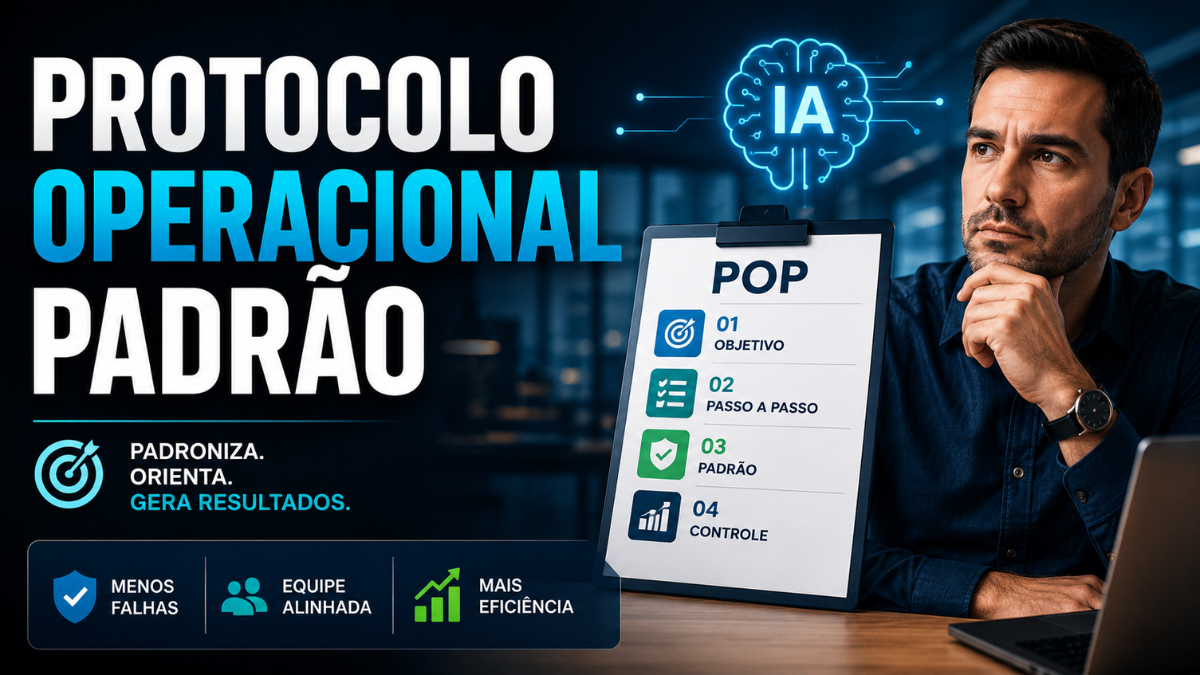
O Protocolo Operacional Padrão é um documento que mostra como uma tarefa deve ser feita, passo a passo, dentro de uma empresa. Ele ajuda a reduzir erros, manter qualidade, treinar equipes e garantir que o processo não dependa apenas da memória de uma pessoa.
Em 2026, o Protocolo Operacional Padrão também precisa funcionar em ambientes digitais. Ele pode orientar equipes presenciais, times remotos, operações em SaaS, lojas virtuais, processos no WordPress, rotinas no Shopify, fluxos de atendimento, vídeos no YouTube e até agentes de IA que precisam seguir instruções claras.
O Que é Protocolo Operacional Padrão em Termos Simples?
Protocolo Operacional Padrão, também conhecido como POP ou procedimento operacional padrão, é um guia oficial que explica como executar uma tarefa da forma correta. Ele organiza uma rotina em uma sequência lógica para que qualquer colaborador treinado consiga repetir o processo com segurança e qualidade.
From what I’ve seen, o POP mais eficiente não é o mais longo. É aquele que a equipe consegue abrir, entender e aplicar sem depender de explicações extras a cada etapa.
Na prática, o POP transforma conhecimento informal em processo documentado. Aquilo que antes ficava apenas na cabeça de um funcionário passa a fazer parte da operação da empresa.
Um POP é um documento de padronização de processos usado para manter consistência, reduzir falhas e orientar a execução de tarefas recorrentes.
Por Que o Protocolo Operacional Padrão Importa em 2026?
O Protocolo Operacional Padrão importa em 2026 porque as empresas trabalham com mais canais, mais ferramentas e mais velocidade. Um mesmo processo pode envolver Google Search, CRM, ERP, planilhas, WhatsApp, e-commerce, sistemas SaaS, ferramentas de analytics e plataformas de conteúdo.
Sem um padrão, cada pessoa executa a tarefa de um jeito. Isso causa retrabalho, atrasos, falhas no atendimento, perda de dados e dificuldade para treinar novos colaboradores.
In real use, o POP ajuda a empresa a crescer sem depender de improviso. Quando a equipe aumenta, o documento reduz dúvidas e mantém o padrão da entrega.
A novidade em 2026 é a conexão com IA generativa. Ferramentas como ChatGPT e Gemini podem ajudar a criar rascunhos, resumir processos, transformar documentos em checklists e adaptar conteúdos para treinamento. Mas a validação precisa continuar humana, feita por quem conhece a rotina real.
IA pode ajudar a estruturar um POP, mas não deve inventar regras internas, riscos operacionais ou decisões críticas da empresa.
Para Que Serve um Protocolo Operacional Padrão na Empresa?
O Protocolo Operacional Padrão serve para garantir que uma tarefa seja feita sempre com o mesmo padrão. Ele reduz erros, melhora a qualidade, facilita o treinamento, organiza responsabilidades e orienta o que fazer quando algo sai do esperado.
Em uma empresa pequena, o POP pode evitar que o dono precise explicar a mesma tarefa todos os dias. Em uma empresa maior, ele ajuda a manter controle entre departamentos, turnos, filiais e equipes diferentes.
A common mistake is tratar o POP como um documento burocrático feito apenas para auditoria. Na realidade, ele deve ser uma ferramenta prática para o dia a dia.
Um POP bem feito responde perguntas essenciais. Ele deixa claro o que deve ser feito, quem deve executar, quais materiais são necessários, qual é a ordem correta e qual ação tomar em caso de falha.
O POP não existe apenas para documentar uma tarefa. Ele existe para tornar a tarefa repetível, treinável, mensurável e menos dependente de interpretação individual.
Principais Elementos de um Protocolo Operacional Padrão Bem Feito
Um Protocolo Operacional Padrão bem feito precisa ter identificação, objetivo, responsáveis, materiais necessários, passo a passo, ações corretivas, resultado esperado e histórico de revisão.
A identificação inclui o nome do procedimento, código do documento, data de criação e número da revisão. Isso ajuda a controlar versões e evita que a equipe use uma orientação antiga.
O objetivo explica por que aquele POP existe. A seção de responsáveis mostra quem executa, quem acompanha e quem aprova o processo. Os materiais necessários incluem ferramentas, sistemas, documentos, insumos, equipamentos ou EPIs.
O passo a passo é o coração do POP. Ele deve ser escrito em ordem lógica, com frases curtas e verbos de ação. Ações corretivas mostram o que fazer se faltar material, se o sistema falhar, se o produto sair do padrão ou se o cliente apresentar uma situação fora do fluxo.
Reality layer: na teoria, o POP pode parecer um documento formal. Na prática, ele só funciona quando é simples o suficiente para ser usado durante a rotina.
Um POP claro deve ser escrito para quem executa a tarefa, não apenas para quem gerencia ou audita o processo.
Como o Protocolo Operacional Padrão Funciona na Prática
Na prática, o Protocolo Operacional Padrão funciona como um roteiro de execução. O colaborador consulta o documento antes de iniciar a tarefa, confirma os materiais, segue os passos e compara o resultado final com o padrão esperado.
Em uma loja Shopify, por exemplo, um POP pode orientar o processo de troca de produto. O atendente verifica o número do pedido, confere a política de troca, registra a solicitação no CRM, atualiza o status no sistema e envia uma resposta padronizada ao cliente.
Em um blog WordPress, um POP pode orientar publicação de artigos. O processo pode incluir revisão do título, verificação de meta description, otimização de headings, inserção de imagens, checagem de links internos e publicação final.
Em um canal do YouTube, o POP pode orientar upload de vídeos, descrição SEO, tags, thumbnail, capítulo, comentário fixado e compartilhamento nas redes sociais.
From what I’ve seen, o POP funciona melhor quando está conectado à ferramenta que a equipe já usa. Se o time trabalha no CRM, o POP deve estar perto do CRM. Se trabalha em Notion, Trello, Asana ou Google Docs, o documento precisa estar lá.
O melhor POP é aquele que aparece no momento da execução, não aquele que fica escondido em uma pasta esquecida.
POP, SOP, Checklist e Instrução de Trabalho
POP e SOP são termos parecidos. POP é usado em português como Protocolo Operacional Padrão ou Procedimento Operacional Padrão. SOP é a sigla em inglês para Standard Operating Procedure.
Checklist não é a mesma coisa. O checklist serve para conferir se etapas foram cumpridas. Ele é mais direto e geralmente funciona melhor em tarefas rápidas.
Instrução de trabalho também é diferente. Ela costuma detalhar uma tarefa específica com mais profundidade técnica. O POP mostra o processo completo, enquanto a instrução de trabalho explica uma parte específica do processo.
Fluxograma é outro formato. Ele mostra visualmente o caminho da tarefa, principalmente quando existem decisões no meio do processo.
Contrarian insight: nem toda tarefa precisa de um POP completo. Às vezes, um checklist visual resolve melhor, principalmente em rotinas simples, rápidas e repetitivas.
O formato certo depende do risco, da frequência e da complexidade da tarefa.
Quando Usar um Protocolo Operacional Padrão?
Use um Protocolo Operacional Padrão quando a tarefa for repetitiva, importante, sensível ou propensa a erro. Ele é útil quando uma falha pode gerar perda de tempo, prejuízo financeiro, problema com cliente, risco de segurança ou queda na qualidade.
O POP também deve ser usado quando a empresa está treinando novos colaboradores, trocando ferramentas, abrindo uma nova unidade, terceirizando atividades ou tentando melhorar a gestão de processos.
No contexto local e vertical, o POP tem grande valor para restaurantes, clínicas, empresas de limpeza, manutenção, logística, escritórios, indústrias, lojas físicas e negócios de e-commerce. Cada setor tem riscos próprios, mas todos precisam de clareza operacional.
A common mistake is esperar o problema acontecer para criar o POP. O ideal é documentar as rotinas críticas antes que falhas virem padrão.
Se a mesma dúvida aparece muitas vezes na equipe, provavelmente existe uma rotina que precisa ser padronizada.
Como Criar um Protocolo Operacional Padrão Passo a Passo
Para criar um Protocolo Operacional Padrão, comece escolhendo uma rotina real. Não escolha algo amplo demais. Prefira uma tarefa específica, repetitiva e importante.
Depois, observe como essa tarefa acontece na prática. Converse com quem executa o processo, porque o operador normalmente conhece detalhes que o gestor não vê.
Em seguida, defina o objetivo do POP, os responsáveis, os materiais necessários e a sequência correta das ações. Escreva com linguagem simples, direta e fácil de seguir.
Depois de escrever, teste o documento com alguém que não domina totalmente a tarefa. Se essa pessoa não conseguir executar o processo usando apenas o POP, o texto precisa ser ajustado.
In real use, a validação é uma das partes mais importantes. Um POP pode parecer claro para quem escreveu, mas confuso para quem vai usar.
Um bom teste de POP é pedir para outra pessoa seguir o documento e marcar todos os pontos onde precisou perguntar algo.
O Que Praticantes Fazem ao Montar um POP Eficiente?
Praticantes experientes não começam pelo modelo. Eles começam pela rotina. Primeiro observam o trabalho, depois identificam riscos, dúvidas, atrasos e pontos de falha.
Eles também envolvem a equipe operacional. Quem executa a tarefa precisa participar da criação do POP, porque conhece os atalhos, problemas e detalhes reais do processo.
From what I’ve seen, praticantes evitam linguagem difícil. Eles preferem frases como “confira o número do pedido” em vez de “realize a validação cadastral do registro transacional”.
Outro ponto importante é adaptar o POP ao canal. Para treinamento interno, ele pode ser um documento. Para rotina diária, pode virar checklist. Para análise de processo, pode virar fluxograma. Para marketing, pode virar artigo, vídeo ou carrossel.
Essa adaptação melhora a visibilidade multiplataforma. O mesmo conteúdo pode funcionar em blog, YouTube, LinkedIn, Instagram, SaaS, e-commerce e páginas locais.
Um POP bem estruturado pode virar base de treinamento, script de vídeo, post social, checklist operacional e fluxo de automação.
Erros Comuns ao Criar um Protocolo Operacional Padrão
Um erro comum é escrever demais. Muitas empresas acham que um documento longo parece mais profissional, mas a equipe tende a ignorar textos difíceis de consultar.
Outro erro é copiar um modelo pronto sem adaptar à realidade da empresa. Modelos ajudam, mas não substituem observação, teste e validação interna.
Também é comum criar o POP sem responsável pela revisão. Com o tempo, ferramentas mudam, equipes mudam, regras mudam e o documento fica desatualizado.
A common mistake is acreditar que o POP substitui treinamento. Ele ajuda muito, mas ainda precisa ser explicado, praticado e reforçado no dia a dia.
O problema de muitas empresas não é falta de documentos. É excesso de documentos que ninguém usa.
Clareza operacional vale mais do que volume documental.
Riscos de Não Ter um POP Atualizado na Operação
Não ter um POP atualizado cria falhas silenciosas. A empresa pode continuar funcionando, mas cada pessoa executa o processo de um jeito.
Isso afeta qualidade, produtividade, segurança, atendimento e análise de desempenho. Quando não existe padrão, fica difícil saber se o problema está na pessoa, na ferramenta ou no processo.
Um POP antigo também pode causar confusão. Imagine uma empresa que mudou de CRM, mas manteve o procedimento antigo com instruções do sistema anterior. O colaborador novo segue o documento e trava no meio da tarefa.
Em setores como limpeza, saúde, alimentação, produção, manutenção e TI, o risco é ainda maior, porque falhas podem envolver segurança operacional, conformidade e responsabilidade da equipe.
Todo POP deve ter data de revisão, dono do processo e critério claro para atualização.
Como um POP Reduz Falhas no Dia a Dia
Imagine uma empresa que recebe pedidos pelo site, WhatsApp, Instagram e ligação telefônica. Antes do POP, cada atendente registra as informações de um jeito. Um usa planilha. Outro deixa no WhatsApp. Outro esquece de atualizar o CRM.
O resultado é perda de informação, atraso no atendimento e dificuldade para acompanhar pedidos.
Com um Protocolo Operacional Padrão, a empresa define uma rotina única. O atendente recebe a solicitação, confirma os dados do cliente, registra no CRM, classifica o tipo de pedido, atualiza o status e envia uma mensagem padrão.
In real use, esse tipo de POP reduz dúvidas e melhora a previsibilidade. O cliente recebe respostas mais consistentes, a equipe encontra informações com mais facilidade e o gestor consegue medir gargalos.
Esse exemplo também pode virar conteúdo multiplataforma. No blog, pode aparecer como estudo de caso. No YouTube, pode virar tutorial. No LinkedIn, pode virar insight de gestão. No Instagram, pode virar carrossel sobre erros de atendimento.
Um POP não apenas organiza a tarefa. Ele torna o processo visível, mensurável e melhorável.
Protocolo Operacional Padrão na Teoria vs na Prática
Na teoria, o Protocolo Operacional Padrão é um documento formal, com campos, aprovações e revisões. Na prática, ele precisa funcionar em ambientes reais, com pressa, interrupções, dúvidas e mudanças de ferramenta.
A teoria valoriza documentação completa. A prática valoriza documentação útil.
A teoria diz que o processo precisa estar descrito. A prática mostra que o processo também precisa ser treinado, testado e revisado.
From what I’ve seen, empresas que tratam o POP como ferramenta viva conseguem melhores resultados do que empresas que tratam o POP como arquivo obrigatório.
A realidade é simples. Um POP bonito, mas ignorado, não padroniza nada. Um POP simples, testado e usado todos os dias, melhora a operação.
Padronização não acontece quando o documento é criado. Ela acontece quando o documento muda o comportamento da equipe.
Vale a Pena Usar Protocolo Operacional Padrão em 2026?
Sim, vale a pena usar Protocolo Operacional Padrão em 2026, principalmente para empresas que querem crescer sem depender de improviso.
O POP ajuda a treinar colaboradores, manter qualidade, reduzir retrabalho, organizar responsabilidades e melhorar a gestão de processos.
A parte mais importante é entender que o POP não deve ficar preso ao papel. Ele pode ser digital, pesquisável, integrado ao CRM, conectado ao ERP, transformado em checklist, usado em LMS e adaptado para automações.
Information gain: muitos conteúdos sobre POP explicam apenas a definição e a estrutura básica. O diferencial em 2026 é mostrar como o Protocolo Operacional Padrão se conecta com IA, Topic Clusters, AEO, GEO, AI Overviews, WordPress, Shopify, YouTube, SaaS, e-commerce, analytics e AI agents.
A vantagem competitiva não está apenas em ter POPs. Está em transformar POPs em processos vivos, treináveis e conectados aos sistemas da empresa.
POP, IA, Automação e Busca Generativa
A grande tendência é o POP digital. Empresas estão saindo de documentos parados e indo para bases de conhecimento, checklists interativos, fluxos automatizados e ferramentas de documentação inteligente.
A IA generativa também muda o processo. ChatGPT, Gemini e outros modelos podem ajudar a estruturar rascunhos, revisar linguagem, criar variações para treinamento e transformar procedimentos em respostas rápidas.
AI agents tornam o POP ainda mais importante. Um agente só executa bem uma tarefa quando recebe instruções claras, limites definidos, dados corretos e ações previstas para exceções.
Na busca generativa, o conteúdo sobre Protocolo Operacional Padrão precisa ser claro, direto e fácil de extrair. Headings em formato de pergunta, respostas curtas, exemplos práticos e entidades bem conectadas ajudam tanto o leitor quanto sistemas de AI Overviews.
Para SEO, o conteúdo precisa respeitar E-E-A-T. Isso significa mostrar experiência real, explicar o que funciona na prática, evitar promessas exageradas e entregar informação útil.
conteúdo preparado para IA não precisa ser robótico. Ele precisa ser claro, original, verificável e bem organizado.
Como Começar Seu Protocolo Operacional Padrão Hoje
Para começar seu Protocolo Operacional Padrão hoje, escolha uma tarefa repetitiva que gera dúvidas, erros ou retrabalho. Observe como ela é feita, converse com quem executa e escreva o processo em linguagem simples.
Defina o objetivo, os responsáveis, os materiais necessários, o passo a passo, as ações corretivas e a data de revisão. Depois, teste o documento com alguém da equipe e ajuste o que estiver confuso.
A melhor forma de começar não é tentar criar uma biblioteca perfeita de POPs. Comece por uma rotina crítica, resolva um problema real e melhore o documento com o uso.
From what I’ve seen, o POP mais útil nasce simples e evolui com a operação.
Conclusão: o Protocolo Operacional Padrão é uma ferramenta essencial para empresas que querem reduzir erros, treinar melhor, manter qualidade e transformar tarefas repetitivas em processos claros. Em 2026, ele também precisa conversar com IA, automação, ferramentas digitais, busca generativa e conteúdo multiplataforma. Quando bem feito, o POP deixa de ser burocracia e vira uma base prática para crescimento, controle e melhoria contínua.
You May Also Like AC Milan vs SSC Bari Timeline
FAQs
O que é Protocolo Operacional Padrão?
Protocolo Operacional Padrão é um documento que explica o passo a passo de uma tarefa para garantir padronização, qualidade e segurança. Na prática, ele evita que cada colaborador execute o processo de um jeito diferente.
Para que serve um POP na empresa?
Um POP serve para reduzir erros, treinar colaboradores, organizar responsabilidades e manter o padrão da operação. Ele também ajuda gestores a identificar falhas e melhorar processos com mais clareza.
Qual é a diferença entre POP e SOP?
POP é o termo usado em português para Protocolo ou Procedimento Operacional Padrão, enquanto SOP significa Standard Operating Procedure em inglês. Os dois têm a mesma função: documentar uma rotina para execução padronizada.
Qual é a diferença entre POP e checklist?
O POP explica o processo completo, com objetivo, responsáveis, materiais, etapas e ações corretivas. O checklist é mais simples e serve para confirmar se os passos principais foram cumpridos.
Como criar um Protocolo Operacional Padrão?
Para criar um Protocolo Operacional Padrão, escolha uma rotina, defina responsáveis, liste materiais, escreva o passo a passo, teste com a equipe e revise periodicamente. In real use, o teste com quem executa a tarefa é o que mostra se o POP realmente funciona.
O que deve ter na estrutura de um POP?
A estrutura de um POP deve incluir título, objetivo, responsáveis, materiais necessários, passo a passo, resultado esperado, ações corretivas e histórico de revisão. Um bom POP também deve ser fácil de ler e rápido de consultar.
Quem deve criar o Protocolo Operacional Padrão?
O Protocolo Operacional Padrão deve ser criado com participação de gestores, supervisores e colaboradores que executam a tarefa. From what I’ve seen, POP feito sem ouvir o operador costuma ficar bonito no papel, mas fraco na prática.
Quando uma empresa deve usar um POP?
Uma empresa deve usar um POP quando uma tarefa é repetitiva, crítica, sensível ou gera dúvidas frequentes. Isso vale para limpeza, cozinha, vendas, atendimento, TI, RH, produção, manutenção e e-commerce.
POP é obrigatório?
O POP nem sempre é obrigatório por lei, mas pode ser exigido em setores regulados ou usado como controle interno de qualidade e segurança. Mesmo quando não é obrigatório, ele ajuda a empresa a trabalhar com mais previsibilidade.
Como o POP ajuda no treinamento de colaboradores?
O POP ajuda no treinamento porque transforma a rotina da empresa em um guia claro para novos colaboradores. Ele reduz dependência de explicações repetidas e mantém o padrão entre equipes diferentes.
Como a IA pode ajudar a criar um POP?
Ferramentas como ChatGPT e Gemini podem ajudar a criar rascunhos, simplificar linguagem, transformar processos em checklists e adaptar o POP para treinamento. A realidade é que a IA ajuda na estrutura, mas a validação final deve vir de quem conhece o processo real.
Por que o Protocolo Operacional Padrão importa em 2026?
Em 2026, o Protocolo Operacional Padrão importa porque empresas precisam de processos digitais, pesquisáveis, treináveis e conectados a sistemas como CRM, ERP, SaaS, WordPress e Shopify. Ele também ajuda equipes e AI agents a seguirem instruções claras com menos erro.

Wyvernity Team is a content writing team with 3 years of experience in creating clear, engaging, and SEO-friendly content for Wyvernity.com.