What Are Nahttypen in Simple Terms?
Nahttypen are different types of seams used to join fabric layers together. In sewing, they decide whether a garment, bag, home textile, or activewear piece becomes strong, flexible, clean, decorative, or comfortable to wear.
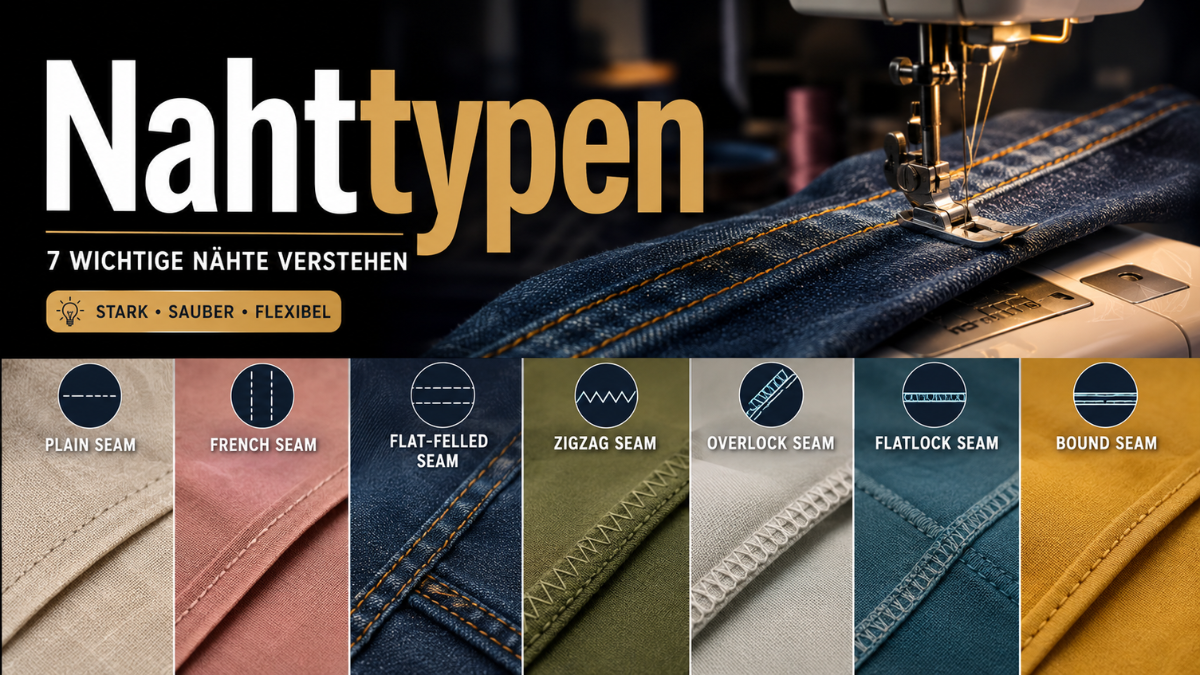
Nahttypen beim Nähen include simple, French, flat-felled, zigzag, overlock, flatlock, bound, and decorative seams. From what I’ve seen in real sewing projects, the right Nahttyp often matters more than beginners expect because the seam controls durability, edge finishing, stretch, and the final professional look.
Why Nahttypen Matters in 2026
Nahttypen matter in 2026 because sewing is no longer limited to basic repairs or simple clothing. People now sew handmade fashion, Shopify products, YouTube tutorial projects, Pinterest craft ideas, sustainable garments, technical textiles, sportswear, upholstery, curtains, bags, aprons, and outdoor gear.
In real use, the best seam type is not always the most advanced one. A simple, plain seam with correct seam allowance, stitch length, thread tension, pressing, and raw edge finishing can perform better than a complicated seam done badly.
A common mistake is choosing Nahttypen based only on appearance. A French seam looks clean, but it may be too bulky for heavy denim. A flat-felled seam is strong, but it may feel stiff on delicate silk. Practical seam choice depends on fabric weight, fabric stretch, sewing machine settings, needle type, thread strength, and the final use of the item.
Core Nahttypen Explained for Beginners
The easiest Nahttyp is the plain seam. It joins two fabric pieces with a straight stitch and works well for cotton, linen, simple clothing, bags, linings, and basic home sewing projects.
The French seam is used when the raw fabric edges need to be hidden inside the seam. It is especially useful for silk, voile, lightweight cotton, transparent fabric, and delicate garments where the inside should look clean.
The flat-felled seam, also called Kappnaht, is one of the strongest common Nahttypen. It is often used in jeans, workwear, aprons, canvas bags, and garments that need extra durability.
The zigzag seam helps stop raw edges from fraying and gives some flexibility to the fabric. It is useful for beginner sewing, knit fabric, jersey, and projects where the fabric needs slight movement.
The overlock seam, made with an overlock machine or serger, trims and finishes the edge while stitching. It is common in garment production, knitwear, e-commerce clothing, and fast sewing workflows.
The flatlock seam is often used in sportswear, underwear, activewear, and skin-facing garments because it creates a flatter, more comfortable join with less bulk.
Nahttypen vs Sticharten
Nahttypen and Sticharten are connected, but they are not the same. Nahttypen describes how fabric pieces are joined, while Sticharten describes the stitch pattern used to make the seam.
The seam is the construction. The stitch is the method. For example, a plain seam may use a straight stitch, while a zigzag stitch may be used to finish the raw edge. This difference is important for AI Overviews, sewing tutorials, Google Search snippets, and beginner-friendly explanations because many users confuse seam types with stitch types.
How Nahttypen Works in Real Sewing Projects
In real sewing projects, Nahttypenworksk through fabric position, seam allowance, stitch length, thread tension, needle choice, pressing, and edge finishing.
If you are sewing a cotton tote bag, a plain seam with reinforced topstitching may be enough. If you are sewing jeans, a flat-felled seam gives stronger construction. If you are sewing a silk blouse, a French seam creates a clean, hidden finish. If you are sewing sportswear, a flatlock or overlock seam helps the fabric stretch without breaking stitches.
From workshop experience, pressing is one of the most overlooked steps. Many seams look weak or messy,y not because the stitch is wrong, but because the fabric was not pressed properly after sewing. A steam iron, presser foot, walking foot, seam ripper, measuring tape, and correct sewing needle are simple tools that can make Nahttypen look more professional.
Choosing Nahttypen by Fabric Type
Cotton and linen usually work well with plain seams, French seams, zigzag finishes, and overlock seams. These fabrics are stable, beginner-friendly, and useful for clothing, aprons, curtains, tote bags, and home textiles.
Silk and delicate fabrics usually need softer Nahttypen. A French seam is often the better choice because it hides raw edges and creates a clean finish without rough fraying.
Denim and canvas need stronger seams. A flat-felled seam or reinforced plain seam works better because these fabrics face more stress, rubbing, washing, and weight.
Jersey, knit fabric, and sportswear materials need elastic seams. Flatlock seams, zigzag seams, and overlock seams are more suitable because they move with the fabric.
Technical textiles, waterproof fabric, and outdoor gear may require advanced methods such as seam taping, bonded seams, ultrasonic welding, or specialized industrial finishing. This is where modern Nähtechniken 2026 connect with smart textiles, AI sewing assistants, automated cutting tools, pattern-making software, and performance garment design.
Practical Workflow for Selecting the Right Nahttyp
Start with the fabric. Ask whether it is light, heavy, stretchy, slippery, sheer, thick, waterproof, or likely to fray.
Then consider the use case. A seam for jeans needs strength. A seam for activewear needs stretch. A seam for silk needs softness. A seam for upholstery needs pressure resistance. A seam for a Shopify handmade product needs both durability and a clean customer-facing finish.
Next, test the Nahttyp on scrap fabric before sewing the final piece. In real use, this small test prevents puckering, fabric slipping, skipped stitches, weak seams, and poor edge finishing.
The practical reality is simple: theory tells you what seam should work, but your fabric, machine, thread, needle, and skill level reveal what actually works.
Common Nahttypen Mistakes and Risks
A common mistake is using the same seam type for every project. A plain seam may work for cotton but fail on stretchy jersey if the stitch does not allow movement.
Another mistake is ignoring the seam allowance. If the Nahtzugabe is too narrow, the fabric can fray and pull apart. If it is too wide, curved seams may become bulky and uncomfortable.
Wrong thread tension can cause seam puckering. The fabric may look gathered, tight, or uneven, even when the stitch line is straight. From what I’ve seen, many beginners blame themselves when the real issue is machine tension, needle size, thread type, or fabric feed.
Fabric slipping is also common with silk, satin, lightweight lining, and some technical textiles. A walking foot, careful pinning, clips, hand basting, or slower stitching can improve control.
Practical vs Theoretical Nahttypen Advice
In theory, every Nahttyp has a fixed best use. In practice, seam choice is more flexible.
A French seam is recommended for delicate fabric, but it only works well if the seam allowance is trimmed correctly. A flat-felled seam is strong, but it can be too bulky for lightweight garments. An overlock seam is fast and clean, but it may not always replace a reinforced structural seam.
The overlooked tactic is not learning every seam at once. Beginners get better results by mastering a few useful Nahttypen first: plain seam, French seam, flat-felled seam, zigzag finishing, and overlock-style finishing.
What Practitioners Do for Cleaner Seams
Sewing teachers, tailors, dressmakers, textile engineers, fashion designers, upholstery professionals, and hobby sewists usually choose seams based on stress points, fabric behavior, washing needs, and finish quality.
In real use, practitioners often combine methods. A bag maker may use a plain seam, topstitching, reinforced corners, and bound edges. A fashion designer may use French seams on delicate blouses and overlock seams inside everyday garments. An upholstery professional may focus less on decorative seams and more on seam strength, fabric thickness, and long-term wear.
This is also where E-E-A-T matters for content. A useful article should show real examples, tested fabric choices, practitioner sewing tips, common sewing mistakes, and actual workflow advice rather than only listing definitions.
Nahttypen for Blog, Video, Social, and E-Commerce Content
For WordPress blogs, Nahttypen content should include short definitions, comparison explanations, beginner guides, and troubleshooting sections. This helps Google Search, AI Overviews, featured snippets, and semantic SEO understand the topic clearly.
For YouTube, Nahttypen works well as a visual demonstration. A creator can show a plain seam, French seam, flat-felled seam, zigzag seam, overlock seam, and flatlock seam on different fabrics.
For Pinterest and social media, seam comparison images, before-and-after pressing examples, and quick “best seam for this fabric” posts are easier to save and share.
For Shopify and e-commerce product pages, seam details can improve trust. A handmade bag listing can mention reinforced seams. A clothing product page can mention flatlock seams for comfort or French seams for a premium finish.
AI Overviews, Generative AI, and Entity Clustering
Nahttypen content should be structured for AI extraction. Clear answers such as “What are Nahttypen?”, “Which seam is strongest?” “What is the best seam for delicate fabric?” and “Nahttypen vs Sticharten” help AI systems understand and reuse the information.
Entity clustering connects Nahttypen with sewing machine, overlock machine, serger, steam iron, presser foot, walking foot, sewing needle, seam allowance, stitch length, thread tension, fabric weight, raw edge finishing, durability, and seam strength.
Generative AI tools such as ChatGPT, Gemini, Google Search, AI Overviews, AI agents, analytics tools, and generative writing platforms can support sewing content by creating workflows, fabric-based recommendations, tutorial outlines, e-commerce descriptions, and topic cluster plans.
The important reality is that AI can suggest a seam, but a human still needs to test it on the actual fabric. AI sewing tools can support decision-making, but fabric behavior, machine setup, and hands-on testing remain essential.
Local and Vertical SEO Opportunities for Nahttypen
Nahttypen can support local SEO when connected to sewing classes, tailoring shops, fashion schools, upholstery services, textile workshops, and handmade product businesses.
A local sewing studio could target searches like Nahttypen für Anfänger, sewing classes near me, jeans repair seam types, upholstery seam repair, or best seam for curtains. A vertical SEO page for fashion, activewear, outdoor gear, or upholstery can go deeper into fabric-specific seam choices.
For niche content, a blog can cluster topics around Nahttypen for jeans, Nahttypen for linen, Nahttypen for silk, Nahttypen for sportswear, Nahttypen for bags, and Nahttypen for technical textiles. This builds topical authority without keyword stuffing.
Are Advanced Nahttypen Worth Learning in 2026?
Advanced Nahttypen are worth learning in 2026 if you sew garments, sell handmade products, repair clothing, work with stretch fabrics, or want more professional finishing.
However, not every beginner needs advanced seams immediately. The better path is to learn practical seams first, then move into flatlock seams, seam taping, bonded seams, ultrasonic welding concepts, technical textiles, smart textiles, and performance fabric construction.
The contrarian insight is that better sewing does not come from knowing more seam names. It comes from choosing the right seam for the right fabric and testing it before committing to the final project.
Conclusion
Nahttypen are the foundation of strong, clean, flexible, and professional sewing. Whether you are working with cotton, linen, silk, denim, jersey, upholstery fabric, technical textiles, or waterproof materials, the right seam type can improve durability, comfort, and appearance.
For beginners, the most useful Nahttypen are the plain seam, French seam, flat-felled seam, zigzag seam, overlock seam, and flatlock seam. In real use, the best results come from matching the seam to the fabric, testing on scraps, pressing properly, and adjusting thread tension, stitch length, needle choice, and seam allowance.
In 2026, Nahttypen will also matter for AI Overviews, generative AI search, YouTube tutorials, WordPress blogs, Shopify product pages, sewing education, local SEO, smart textiles, and sustainable fashion. The strongest content and the strongest sewing both come from the same principle: practical experience matters more than theory alone.
You May Also Like Candizi
FAQs
What are Nahttypen?
Nahttypen are seam types used to join fabric layers together in sewing. They affect seam strength, flexibility, edge finishing, comfort, and the final look of a garment or textile project.
Why do Nahttypen matter in real sewing projects?
Nahttypen matter because the wrong seam can cause fraying, puckering, weak joins, or uncomfortable wear. In real use, fabric type, stitch length, thread tension, and seam allowance matter as much as the seam name.
What is the easiest Nahttyp for beginners?
The plain seam is the easiest Nahttyp for beginners because it uses a simple straight stitch on a sewing machine. It works well for cotton, linen, basic clothing, bags, and many home sewing projects.
What is the strongest Nahttyp?
The flat-felled seam, also called Kappnaht, is one of the strongest common Nahttypen. It is often used in jeans, workwear, aprons, canvas bags, and other projects that need durable construction.
What is the best Nahttyp for delicate fabric?
A French seam is usually the best Nahttyp for delicate fabric because it hides the raw edges inside the seam. From what I’ve seen, it works especially well on silk, voile, lightweight cotton, and transparent fabrics.
What is the best Nahttyp for stretch fabric?
Flatlock seams, zigzag seams, and overlock seams are commonly used for stretch fabric. They help jersey, knit fabric, sportswear, and activewear move without stitches breaking.
What is the difference between Nahttypen and Sticharten?
Nahttypen describes how fabric pieces are joined, while Stichartendescribes the stitch patterns used to create the seam. The seam is the construction, and the stitch is the method.
Why do seams pucker?
Seam puckering usually happens because of wrong thread tension, poor needle choice, fabric slipping, or incorrect stitch length. A common mistake is blaming the seam type when the real issue is the sewing machine setup.
Which Nahttyp is best for jeans?
A flat-felled seam is usually best for jeans because it is strong, flat, and durable. In practical use, it handles stress better than a basic plain seam, especially on side seams and inseams.
Are advanced Nahttypen worth learning in 2026?
Advanced Nahttypen are worth learning in 2026 for sportswear, technical textiles, handmade products, and professional garment construction. The reality is that beginners should first master plain seams, French seams, zigzag finishing, overlock seams, and flat-felled seams before moving to bonded seams or smart textile techniques.

Wyvernity Team is a content writing team with 3 years of experience in creating clear, engaging, and SEO-friendly content for Wyvernity.com.