
Introduction
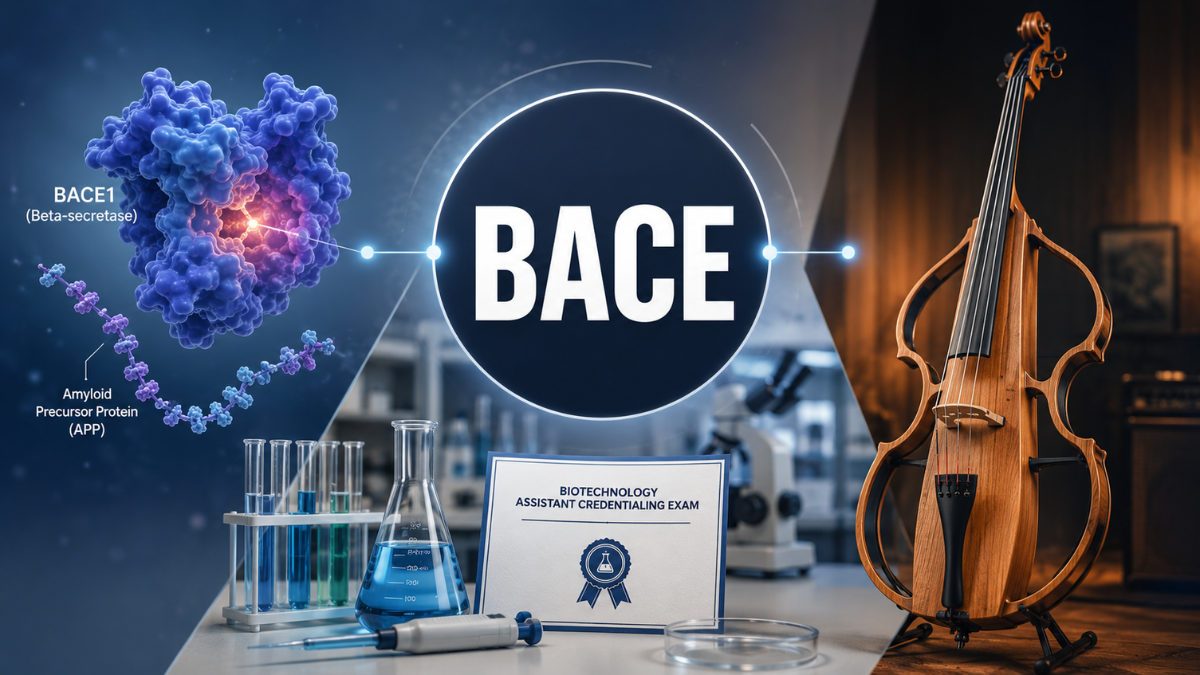
The term BACE can represent several different concepts across science, healthcare, education, music, and business. Without additional context, searching for “BACE” can lead to different results because the same abbreviation is used by multiple industries.
In healthcare and neuroscience, BACE1 (Beta-Amyloid Cleaving Enzyme 1) is an important enzyme studied because of its connection with amyloid production and Alzheimer’s disease research. In biotechnology education, BACE refers to the Biotechnology Assistant Credentialing Exam, a certification designed to assess foundational skills for entry-level biotechnology careers. In music, The Bace refers to a specialized handcrafted bass-cello instrument created for musicians who want an upright bass sound while maintaining the feel of a bass guitar.
There are also business-related uses of the term, including company names, organizations, and industry events.
Understanding the meaning of BACE requires looking at the context in which the term appears. A medical researcher, biotechnology student, musician, and business professional may all search for “BACE” but expect completely different information.
This guide explains the different meanings of BACE, how each one works, why it matters, and how to identify the right interpretation.
What Does BACE Mean?
BACE is an abbreviation used in multiple fields. The meaning depends on the industry, audience, and purpose.
The most common meanings include:
- BACE1 (Beta-Amyloid Cleaving Enzyme 1) — A biological enzyme involved in processing amyloid precursor protein and widely studied in Alzheimer’s disease research.
- BACE Exam (Biotechnology Assistant Credentialing Exam) — A professional certification exam that evaluates biotechnology knowledge and laboratory skills.
- The Bace (Bass-Cello Instrument) — A hybrid musical instrument combining features of a cello and bass guitar.
- BACE Business Names — Various companies, investment firms, manufacturing organizations, and events use BACE as part of their name.
Because these meanings belong to unrelated fields, the surrounding context is the most important clue.
For example:
- A medical article mentioning proteins, enzymes, or Alzheimer’s disease is likely discussing BACE1.
- A career website discussing laboratory skills or biotechnology training is likely referring to the BACE exam.
- A musician discussing strings, scale length, or sound quality is probably referring to The Bace instrument.
Why Does Understanding BACE Matter?
Knowing the correct meaning of BACE helps users avoid confusion and find accurate information.
A person researching Alzheimer’s treatments needs scientific information, while someone preparing for a biotechnology career needs educational resources. Similarly, a musician comparing instruments needs product specifications rather than medical research.
Understanding the context behind abbreviations is increasingly important because search engines and AI-powered tools attempt to interpret user intent. A broad keyword like “BACE” requires additional signals to determine the correct topic.
The meaning can affect:
- The type of information needed
- The reliability of sources
- The decisions a user makes
- The actions taken after research
For example, information about BACE1 inhibitors may influence medical research discussions, while information about the BACE exam may affect education and career planning.
The Main Categories of BACE
The term BACE can generally be divided into four major categories.
1. BACE in Science and Healthcare
The scientific meaning of BACE is mainly associated with BACE1, an enzyme studied in neuroscience.
BACE1 stands for Beta-Site Amyloid Precursor Protein Cleaving Enzyme 1. It is a type of enzyme known as a beta-secretase.
Enzymes are biological molecules that help control chemical reactions in living organisms. BACE1 plays a role in breaking down a protein called amyloid precursor protein (APP).
This process is important because certain APP fragments contribute to the formation of beta-amyloid peptides. These peptides can accumulate into plaques in the brain, which are one of the biological features associated with Alzheimer’s disease.
Researchers have studied BACE1 because reducing its activity may lower the production of beta-amyloid. This led to the development of BACE inhibitors, a class of experimental drugs designed to block the enzyme.
However, BACE1 research has shown that the enzyme also has normal biological functions. Completely blocking it may create unwanted effects, which has made drug development challenging.
The study of BACE1 demonstrates that biological systems are complex. A molecule involved in disease pathways may also perform important roles in healthy cells.
How Does BACE1 Work?
BACE1 functions by cutting specific proteins into smaller fragments.
The simplified process is:
- Amyloid precursor protein (APP) exists naturally in brain cells.
- BACE1 cuts APP at a specific location.
- This produces fragments that participate in the amyloid pathway.
- Additional enzymes process these fragments.
- Some resulting beta-amyloid peptides may accumulate into plaques.
Researchers investigate this pathway because changing enzyme activity may influence disease-related processes.
However, Alzheimer’s disease is not caused by a single factor. It involves multiple biological mechanisms, including inflammation, genetics, aging, and other cellular processes.
Therefore, BACE1 is considered one important area of research rather than a complete explanation of the disease.
BACE1 and Alzheimer’s Disease Research
BACE1 became a major research target because of its connection with beta-amyloid production.
Scientists developed BACE inhibitors with the goal of reducing amyloid formation. Several pharmaceutical companies investigated these drugs through clinical trials.
The research provided valuable insights into:
- Amyloid processing
- Brain enzyme activity
- Drug development challenges
- The complexity of neurological diseases
Although some BACE inhibitor programs did not achieve expected clinical outcomes, the research improved scientific understanding of Alzheimer’s biology.
The lessons from BACE1 studies continue to influence neuroscience research and future therapeutic approaches.
2. BACE as a Biotechnology Certification Exam
Another important meaning of BACE is the Biotechnology Assistant Credentialing Exam.
This BACE certification is designed for individuals entering the biotechnology industry. It evaluates whether candidates understand fundamental biotechnology concepts and laboratory practices.
The biotechnology sector includes industries such as:
- Pharmaceutical research
- Medical diagnostics
- Agricultural biotechnology
- Laboratory services
- Life science manufacturing
Entry-level biotechnology professionals often need practical knowledge in areas such as laboratory safety, scientific procedures, and biological concepts.
The BACE exam helps measure foundational competency for students and early-career professionals.
Who Is the BACE Exam Designed For?
The BACE exam is generally relevant for:
- Biotechnology students
- High school biotechnology programs
- Technical education learners
- Entry-level laboratory workers
- Individuals exploring biotechnology careers
It can help demonstrate basic industry knowledge and provide evidence of technical preparation.
For students, certifications can complement classroom learning by showing that they understand practical concepts used in biotechnology environments.
What Skills Does the BACE Exam Evaluate?
The exact exam structure may vary depending on the certification provider and updates, but biotechnology competency areas commonly include:
- Laboratory safety
- Scientific measurement
- Biotechnology terminology
- Molecular biology concepts
- Cell biology fundamentals
- Laboratory techniques
- Quality practices
The purpose is not to replace professional experience but to assess whether candidates have a foundation for further training.
BACE Certification and Career Development
A biotechnology certification can support career preparation by helping students identify knowledge gaps and demonstrate commitment to the field.
However, employers typically consider multiple factors, including:
- Education background
- Laboratory experience
- Communication skills
- Technical abilities
- Workplace readiness
A certification is one part of professional development rather than a guaranteed pathway to employment.
3. BACE as The Bace Musical Instrument
Another completely different meaning of BACE refers to The Bace, a specialized musical instrument designed for bass players who want a sound closer to an upright double bass while maintaining the familiar playing style of a bass guitar.
Unlike a traditional acoustic bass guitar, which is usually shaped like a larger guitar, The Bace uses a cello-style body design combined with bass guitar features.
The goal is to provide musicians with:
- A warmer acoustic bass tone
- More upright bass character
- A familiar 34-inch bass scale
- Easier transition for bass guitar players
This makes it interesting for musicians who want the expressive qualities of a double bass without completely changing their playing technique.
How Does The Bace Instrument Work?
The Bace combines elements from several instruments.
Its design typically includes:
- A cello-shaped body
- Bass guitar scale length
- Upright bass strings
- Acoustic body construction
- Electronic amplification options
The cello-like body helps create a larger acoustic chamber, which contributes to a deeper and more resonant tone.
The bass guitar scale allows players who already understand bass guitar techniques to adapt more easily.
This combination creates a middle ground between:
- Traditional electric bass
- Acoustic bass guitar
- Upright double bass
Features of The Bace
Common features associated with this instrument include:
- Cello-style body shape
- Solid wood construction
- Maple neck
- Ebony fingerboard
- Bass guitar scale length
- Upright bass strings
- Pickup and microphone systems
- Acoustic amplification options
These features are designed to provide both acoustic character and stage usability.
Who Might Use The Bace?
The Bace may appeal to:
- Bass guitar players wanting upright-style tones
- Studio musicians
- Acoustic performers
- Jazz musicians
- Folk and world music performers
- Artists who need portability
For musicians who frequently move between electric bass and upright bass styles, a hybrid instrument can offer flexibility.
However, it may not completely replace a traditional double bass because each instrument has different playing techniques, physical characteristics, and sound qualities.
The Bace Compared With Traditional Bass Instruments
The Bace vs Electric Bass
An electric bass relies heavily on pickups and amplification to create its sound.
The Bace focuses more on acoustic resonance while still providing amplification options.
Electric bass advantages:
- Easier portability
- Wide range of tones
- Common performance setup
The Bace advantages:
- More acoustic character
- Upright-style tone
- Different visual and musical expression
The Bace vs Double Bass
A double bass produces a unique deep acoustic sound and has a long history in classical, jazz, and orchestral music.
Advantages of double bass:
- Traditional upright sound
- Established playing technique
- Professional acceptance across many genres
Advantages of The Bace:
- Easier transition for bass guitar players
- Smaller scale compared with full double bass
- Hybrid design flexibility
The right choice depends on the musician’s goals and playing style.
4. BACE in Business and Industry
Beyond science, education, and music, BACE is also used by various businesses and organizations.
Because abbreviations are often reused, different companies may use BACE as part of their branding.
Examples include businesses involved in:
- Manufacturing
- Investment
- Aviation
- Industrial equipment
- Technology services
The meaning depends entirely on the organization using the name.
When researching a company called BACE, users should verify:
- Official company website
- Industry category
- Location
- Products or services
- Customer reviews
- Business registration details
A company name alone is usually not enough to identify the correct organization.
NBAA-BACE: Business Aviation Convention & Exhibition
One notable industry use is NBAA-BACE, associated with the business aviation sector.
The event brings together aviation professionals, manufacturers, service providers, and industry leaders.
It focuses on topics such as:
- Business aircraft
- Aviation technology
- Aircraft operations
- Industry networking
- Aviation services
In this context, BACE does not refer to science or biotechnology. It represents a completely different industry event.
How to Identify Which BACE You Need
Since BACE has multiple meanings, the best approach is to examine the surrounding information.
Ask these questions:
What industry is being discussed?
Examples:
- Medicine → likely BACE1
- Biotechnology education → likely BACE exam
- Music → likely The Bace instrument
- Business → company or event name
What type of information are you looking for?
If you need:
- Disease research → investigate BACE1
- Career certification → investigate BACE exam
- Musical equipment → investigate The Bace
- Company details → identify the specific organization
What sources should you trust?
Different BACE meanings require different sources.
For scientific information:
Use:
- Peer-reviewed research
- Medical institutions
- Scientific databases
For certifications:
Use:
- Official certification providers
- Educational institutions
- Training organizations
For products:
Use:
- Manufacturer information
- Professional reviews
- User experiences
For companies:
Use:
- Official business websites
- Regulatory records
- Industry sources
Benefits of Understanding the Correct BACE Meaning
Correct interpretation helps users:
Make Better Decisions
Choosing the wrong information source can lead to confusion.
A student looking for biotechnology training does not need Alzheimer’s research information, and a musician does not need medical explanations.
Save Research Time
Understanding context allows users to search more effectively.
Instead of searching only:
“BACE”
users can search:
- “BACE1 Alzheimer’s research”
- “BACE biotechnology certification”
- “The Bace bass cello instrument”
- “BACE aviation event”
Specific searches produce more accurate results.
Evaluate Information Quality
Different topics require different standards of evidence.
Medical claims require scientific research.
Product claims require manufacturer details and practical reviews.
Career information requires verified educational resources.
Common Mistakes When Searching for BACE
Mistake 1: Assuming BACE Has Only One Meaning
A common mistake is believing that every result about BACE refers to the same subject.
Because abbreviations are reused across industries, context is essential.
Mistake 2: Using the Wrong Information Source
A medical research paper cannot explain a music product, and a product page cannot explain a biological mechanism.
Always match the source type with the topic.
Mistake 3: Ignoring Updated Information
Scientific research, certifications, products, and companies can change over time.
Users should check current information from reliable sources.
Mistake 4: Confusing Research With Treatment Results
In healthcare topics like BACE1, laboratory research does not always translate into successful treatments.
Scientific discoveries often require years of additional testing.
Future Considerations for BACE
The future of BACE depends on the field being discussed.
Future of BACE1 Research
Research into BACE1 continues to contribute to understanding brain biology and Alzheimer’s disease mechanisms.
Future studies may focus on:
- More precise biological targets
- Combination treatment approaches
- Earlier disease detection
- Better understanding of brain pathways
The experience from BACE inhibitor research has shown that targeting complex diseases requires understanding multiple biological systems.
Future of Biotechnology Certification
As biotechnology continues expanding, technical education and skill validation may become increasingly important.
Areas such as:
- Genetic technologies
- Biomanufacturing
- Diagnostics
- Laboratory automation
may increase demand for trained professionals.
Certification programs may continue evolving to match industry requirements.
Future of Hybrid Musical Instruments
Musical instrument design continues to combine traditional craftsmanship with modern technology.
Hybrid instruments like The Bace demonstrate how designers are creating solutions for musicians who want specific sounds with greater flexibility.
How to Choose the Right Information About BACE
Before acting on BACE-related information, consider:
1. Identify the Context
Determine whether the topic is:
- Healthcare
- Education
- Music
- Business
2. Check Source Reliability
Look for:
- Official documentation
- Professional organizations
- Scientific publications
- Manufacturer information
3. Understand Limitations
Every BACE meaning has limitations.
BACE1 research does not represent a complete Alzheimer’s solution.
A certification does not guarantee employment.
A musical instrument does not replace every traditional instrument.
A company name does not automatically indicate credibility.
4. Compare Options
Before making decisions, compare:
- Goals
- Costs
- Benefits
- Requirements
- Alternatives
The correct choice depends on individual needs.
FAQs
What is BACE?
BACE is an abbreviation that can refer to different topics depending on the context. The most common meanings include BACE1 (Beta-Amyloid Cleaving Enzyme 1) in neuroscience, the Biotechnology Assistant Credentialing Exam in biotechnology education, and The Bace musical instrument designed for bass players.
The correct meaning depends on the industry, purpose, and information source.
Is BACE related to Alzheimer’s disease?
Yes, when referring to BACE1. BACE1 is an enzyme studied in Alzheimer’s disease research because it plays a role in processing amyloid precursor protein, which is connected to beta-amyloid production.
However, Alzheimer’s disease involves many biological processes, and BACE1 is only one area of research rather than a complete explanation or treatment solution.
What is the BACE exam used for?
The BACE exam is designed to assess foundational biotechnology knowledge and technical understanding for individuals entering the biotechnology field.
It may be useful for students, career explorers, and entry-level biotechnology learners who want to demonstrate basic competency.
A certification can support career preparation, but employers usually consider education, laboratory experience, and practical skills as well.
Is The Bace the same as an acoustic bass guitar?
No. The Bace is a specialized hybrid instrument that combines characteristics of a cello and bass guitar.
It aims to provide a deeper acoustic sound similar to an upright bass while maintaining features familiar to bass guitar players.
It is different from a standard acoustic bass guitar and a traditional double bass.
Why does BACE have multiple meanings?
BACE is an acronym used by different industries. Organizations, researchers, educators, and manufacturers often create abbreviations independently.
Because of this, the same letters can represent unrelated concepts.
The surrounding context is the best way to determine the intended meaning.
Quick Summary of BACE Meanings
| BACE Meaning | Industry | Main Purpose |
| BACE1 | Healthcare and neuroscience | Research enzyme involved in amyloid processing |
| BACE Exam | Biotechnology education | Assess biotechnology knowledge and laboratory skills |
| The Bace | Music industry | Hybrid bass-cello instrument |
| BACE Companies/Events | Business | Organization or industry-specific branding |
Final Thoughts: Understanding BACE Requires Context
BACE is a perfect example of why context matters when searching online. The same four letters can represent a neuroscience enzyme, a biotechnology certification, a musical instrument, or a business organization.
For researchers, BACE1 represents an important area of scientific investigation. For biotechnology learners, the BACE exam represents a way to measure foundational skills. For musicians, The Bace offers a unique approach to achieving an upright-style bass sound.
The best way to understand BACE is to first identify the field, then evaluate information from reliable sources connected to that field.
Whether you are researching science, planning a career, choosing an instrument, or investigating a company, knowing the correct meaning of BACE helps you find more accurate information and make better decisions.
You May Also Like Robloxftw Com

Wyvernity Team is a content writing team with 3 years of experience in creating clear, engaging, and SEO-friendly content for Wyvernity.com.