
Introduction
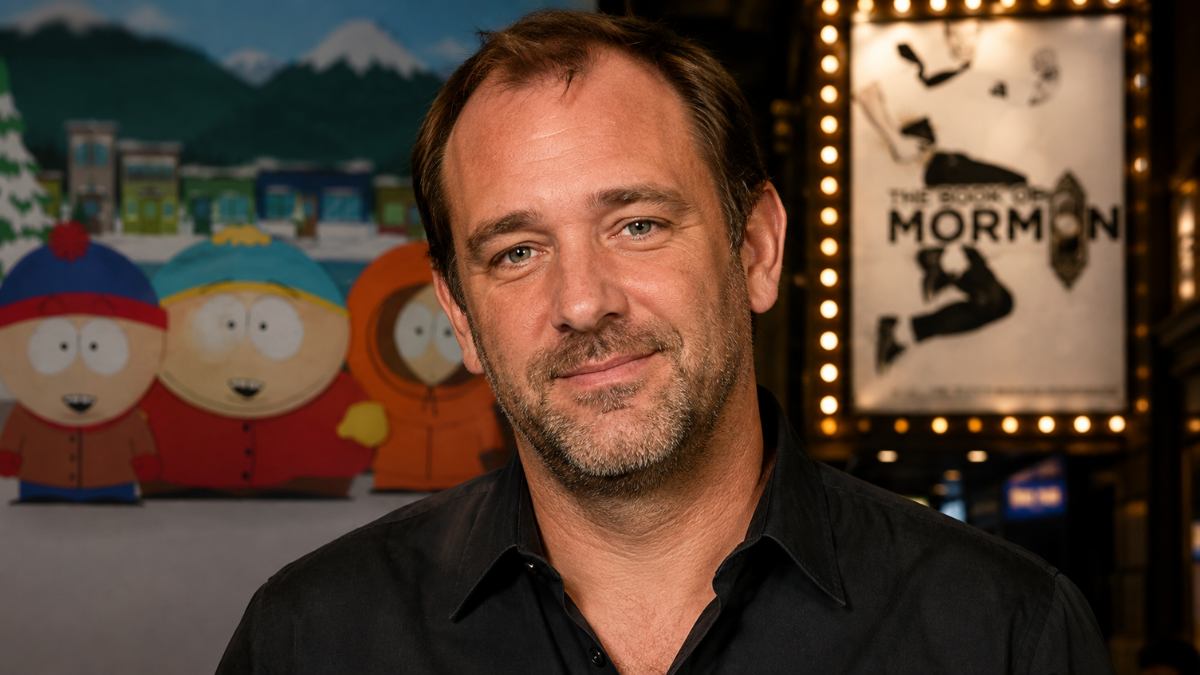
Trey Parker is an American animator, writer, actor, producer, director, and composer best known as the co-creator of the groundbreaking animated series South Park and the Tony Award-winning Broadway musical The Book of Mormon. Through a career spanning television, film, theater, and music, Parker has built a reputation for combining sharp satire, unconventional comedy, and musical storytelling.
Born on October 19, 1969, in Conifer, Colorado, Trey Parker began as a young filmmaker fascinated by comedy, animation, and music before becoming one of the most influential creators in modern entertainment. His partnership with Matt Stone transformed a simple animated short into a global franchise, while his Broadway work proved that his creative abilities extended far beyond television.
Today, Parker is recognized not only for creating controversial and culturally significant entertainment but also for understanding how creative ownership, intellectual property, and audience connection can turn an unusual idea into a long-lasting business.
This article explores Trey Parker’s early life, career journey, South Park success, film projects, Broadway achievements, creative approach, wealth, influence, and the lessons behind his decades-long career.
Who Is Trey Parker? A Quick Overview of His Life and Career
Trey Parker is a multi-talented entertainment creator whose work covers animation, screenwriting, acting, directing, and songwriting. He gained worldwide recognition after launching South Park with his longtime creative partner Matt Stone in 1997.
The series became famous for its combination of crude humor, social commentary, political satire, and fast reactions to current events. Unlike many animated shows that rely mainly on fictional storytelling, South Park often examines real-world issues through exaggerated characters and situations.
Beyond animation, Parker achieved major success in musical theater through The Book of Mormon, created with Matt Stone and songwriter Robert Lopez. The production became one of Broadway’s most successful modern musicals, earning multiple Tony Awards and a Grammy Award for its original cast recording.
While many audiences know Parker primarily as the voice behind characters such as Eric Cartman and Stan Marsh, his career is built around a broader creative role: developing ideas, writing stories, composing music, directing productions, and maintaining creative control over his work.
Trey Parker’s Personal Background and Early Life
Trey Parker was born as Randolph Severn Parker III in Conifer, Colorado, a small mountain community near Denver. His father, Randy Parker, worked as a geologist, while his mother, Sharon Parker, worked as an insurance broker.
From an early age, Parker showed a strong interest in storytelling, comedy, and performance. He became interested in filmmaking as a teenager and began creating short films with friends using a video camera his father purchased for him.
Comedy and music were both major influences during his childhood. One of his biggest inspirations was the British comedy group Monty Python, especially the unusual visual style and absurd humor associated with filmmaker Terry Gilliam.
This influence later became visible in Parker’s own work, particularly in his willingness to combine animation, fantasy, social criticism, and unpredictable humor.
Parker was also interested in musical theater. During high school, he participated in theater productions, designed sets, played piano, and developed skills that would later become essential in creating musical projects such as South Park: Bigger, Longer & Uncut and The Book of Mormon.
His early creative interests were not limited to one medium. Instead, Parker developed a combination of skills in film, music, acting, and writing that eventually shaped his unique career.
Trey Parker’s Education and First Creative Experiments
After graduating from Evergreen High School in 1988, Parker briefly attended the Berklee College of Music before transferring to the University of Colorado Boulder, where he studied film and Japanese.
His time at university became a turning point because it introduced him to other creative students who shared his interest in filmmaking. During this period, Parker met Matt Stone, a mathematics student with a similar appreciation for comedy, animation, and unconventional storytelling.
The two quickly developed a creative partnership based on their shared influences and interest in pushing boundaries.
While studying at the University of Colorado Boulder, Parker and Stone created several short films. One of Parker’s early animation projects was American History, a short film made using a simple construction-paper animation technique. The project demonstrated his ability to create effective storytelling without traditional animation resources.
Their college work established a pattern that would continue throughout their careers: using limited resources, strong writing, and creative ideas rather than relying only on expensive production methods.
How Trey Parker Started His Entertainment Career
The Creation of Cannibal! The Musical
Before South Park became a global success, Trey Parker and Matt Stone experimented with independent filmmaking.
Their first major feature project was Cannibal! The Musical, originally titled Alferd Packer: The Musical. The film was inspired by the real-life story of Alferd Packer, a 19th-century Colorado prospector accused of cannibalism.
Parker took on multiple responsibilities for the project, working as a writer, director, actor, and composer. The film combined western storytelling with musical comedy, showing the creative style that would later define much of his career.
Although the movie did not become a mainstream success at release, it developed a cult following and demonstrated Parker’s ability to blend comedy and music in unusual ways.
The project also helped establish his relationship with Matt Stone as a creative team capable of developing original ideas outside traditional Hollywood systems.
The Spirit of Christmas: The Short Film That Changed Everything
The biggest breakthrough in Parker and Stone’s early career came through The Spirit of Christmas, a short animated film created in the 1990s.
The project featured four foul-mouthed children and a highly unusual comedic approach to religious and cultural topics. Two versions were created, including Jesus vs. Frosty and Jesus vs. Santa.
The second version gained attention after being distributed widely among entertainment executives and later spreading online. At the time, internet video sharing was still developing, making the short one of the early examples of viral digital content.
The popularity of the short attracted interest from television networks and eventually led to the creation of South Park for Comedy Central.
This moment became a defining example of how unconventional creative work could find an audience outside traditional entertainment channels.
Orgazmo and Early Hollywood Projects
Before South Park reached its peak popularity, Parker continued developing his filmmaking skills through projects such as Orgazmo, a live-action comedy released in 1997.
Parker wrote, directed, and starred in the film, playing a Mormon character who becomes involved in the adult film industry. Like much of his later work, the movie combined social commentary with absurd comedy.
Although Orgazmo did not achieve major commercial success, it helped Parker gain experience working with larger production teams and demonstrated his interest in challenging traditional comedy formats.
These early projects created the foundation for his later success by allowing him to experiment with storytelling, music, performance, and satire.
South Park: Trey Parker’s Career-Defining Creation
What Is South Park and Why Did It Become Successful?
South Park is the project that transformed Trey Parker from an independent filmmaker into one of the most recognized creators in modern entertainment. The animated comedy series premiered on Comedy Central on August 13, 1997, and was created by Trey Parker and Matt Stone.
The show follows four children—Stan Marsh, Kyle Broflovski, Eric Cartman, and Kenny McCormick—living in the fictional mountain town of South Park, Colorado. Although the characters are children, the series explores complex adult topics including politics, religion, celebrity culture, social movements, technology, and current events.
The success of South Park came from its unusual combination of simplicity and complexity. The animation style was intentionally basic, but the writing focused on detailed social observations and cultural criticism.
Unlike traditional animated comedies that often avoid controversial subjects, South Park built its identity around discussing issues many other shows avoided. Its satire works by exaggerating real-world situations and using humor to question different viewpoints.
The show’s popularity also came from its ability to react quickly to cultural conversations. While many television productions require months of planning, South Park developed a reputation for addressing recent events while they were still relevant.
Over the years, the series became one of the longest-running and most influential adult animated programs, earning multiple awards including Primetime Emmy Awards for Outstanding Animated Program.
Trey Parker’s Role in South Park
Trey Parker’s contribution to South Park extends far beyond being a co-creator. He has been deeply involved in almost every major creative aspect of the series.
His roles include:
- Writer
- Director
- Producer
- Composer
- Voice actor
Together with Matt Stone, Parker maintained significant creative control over the show’s direction, characters, and storytelling approach.
Parker’s writing style is central to the identity of South Park. His scripts often combine simple setups with complicated social commentary, allowing episodes to function both as comedy and as cultural analysis.
The partnership between Parker and Stone has been one of the most important factors behind the show’s longevity. Rather than separating writing, production, and performance into different departments, the creators remained directly involved in the entire process.
This creative involvement allowed South Park to maintain a consistent voice over multiple decades.
Characters Voiced by Trey Parker
One of Trey Parker’s most recognizable talents is his voice acting. He provides voices for several major South Park characters, often creating completely different personalities through changes in tone and delivery.
Eric Cartman
Eric Cartman is one of the most famous characters in the series. He is known for his extreme personality, selfish behavior, and unpredictable actions.
Cartman has become one of adult animation’s most recognizable characters because Parker uses him as a way to explore themes such as prejudice, manipulation, consumer culture, and childhood selfishness.
Stan Marsh
Stan Marsh represents a more balanced perspective within the series. His character often reacts to the strange events happening around him, providing a viewpoint closer to the audience.
Randy Marsh
Randy Marsh, Stan’s father, became one of the show’s most popular adult characters. Parker’s performance helped transform Randy from a supporting character into a major part of later South Park storylines.
Mr. Hankey and Other Characters
Parker also voices characters including Mr. Hankey and numerous other recurring roles.
His ability to perform multiple voices contributes to South Park’s distinctive style and allows the creators to maintain creative flexibility.
How Trey Parker Makes South Park Episodes
One of the most unusual aspects of South Park is its rapid production process.
The creators developed a workflow where episodes can move from idea development to completed broadcast within a very short period. This approach allows the series to respond to current events much faster than most scripted television programs.
The process typically involves:
- Developing an idea based on current cultural events
- Writing the episode
- Recording voices
- Completing animation
- Preparing the final broadcast
This approach creates both advantages and challenges.
The advantage is relevance. South Park can discuss events while audiences are still actively thinking about them.
The limitation is that the process requires intense creative pressure. Producing quickly leaves less time for traditional revision cycles, detailed visual development, or long-term planning.
The method works because Parker and Stone have decades of experience understanding the tone and structure of their show. It would be difficult for a new production team to copy the same process without a strong creative foundation.
South Park’s Business Success and Creative Ownership
Beyond its cultural impact, South Park became a valuable entertainment property.
The franchise expanded beyond television into:
- Merchandise
- Video games
- Streaming rights
- Digital distribution
- International licensing
A major turning point came when Parker and Stone negotiated a deal that allowed them to share in digital revenue connected to South Park. This decision became extremely valuable as streaming and online entertainment grew.
The lesson from South Park’s business model is that successful creators do not only focus on producing content; they also consider ownership, distribution, and long-term intellectual property value.
Many creators today attempt to build similar models through independent platforms, digital products, and direct audience relationships, but South Park’s success demonstrates how powerful ownership can become when combined with a globally recognized brand.
Trey Parker’s Major Film and Television Projects
Although South Park remains Trey Parker’s most famous creation, his career includes several important film and television projects that demonstrate his range as a creator.
South Park: Bigger, Longer & Uncut (1999)
The first South Park feature film, South Park: Bigger, Longer & Uncut, expanded the television series into a full-length musical comedy.
The film followed the same satirical style as the show while increasing the role of music and theatrical storytelling.
One of its most notable achievements was the song “Blame Canada,” written by Trey Parker and composer Marc Shaiman. The song received an Academy Award nomination for Best Original Song.
The movie was also commercially successful, earning strong reviews and proving that South Park’s humor could work beyond television.
The film remains an important example of Parker’s ability to combine animation, comedy, and songwriting.
Team America: World Police (2004)
Trey Parker continued exploring political satire with Team America: World Police, a puppet-based action comedy created with Matt Stone.
The film used exaggerated characters and absurd situations to criticize political systems, Hollywood culture, and international intervention.
Parker contributed as:
- Writer
- Director
- Actor
- Composer
The project demonstrated his interest in using different creative formats to express similar themes found in South Park.
That’s My Bush! and Other Television Work
Before and during South Park’s growth, Parker and Stone explored other television projects.
One example was That’s My Bush!, a political satire series that humorously imagined the personal life of former U.S. President George W. Bush.
Although the show had a short run, it reflected Parker and Stone’s continued interest in combining comedy with political commentary.
Their broader television work helped establish them as creators willing to experiment with different formats and subjects.
The Book of Mormon: Trey Parker’s Broadway Success
How Trey Parker Created The Book of Mormon
In 2011, Trey Parker achieved another major milestone with the Broadway musical The Book of Mormon.
The production was created by Parker, Matt Stone, and songwriter Robert Lopez, who was already known for his work in musical theater.
The musical follows two young missionaries sent to Uganda and uses comedy and satire to examine religion, cultural differences, and traditional Broadway storytelling.
Although the subject matter was controversial, the production gained recognition because of its strong musical composition, professional theater structure, and carefully developed humor.
The success of The Book of Mormon showed that Parker’s creative abilities were not limited to animation.
The Book of Mormon: Trey Parker’s Broadway Success
Awards and Achievements of The Book of Mormon
The Book of Mormon became one of the most successful Broadway musicals of the 21st century. The production received widespread critical praise for combining traditional musical theater techniques with Parker and Stone’s trademark satire.
At the 2011 Tony Awards, the musical won nine awards, including Best Musical, making it one of the biggest winners of that year’s ceremony. The original cast recording also received a Grammy Award for Best Musical Theater Album.
The success of the musical demonstrated an important part of Trey Parker’s creative identity: his ability to understand the structure of classic entertainment while challenging audience expectations.
Instead of simply creating a parody of Broadway, Parker and his collaborators built a professionally produced musical with memorable songs, character development, and emotional moments alongside comedy.
The production continued with Broadway performances and international productions, proving that audiences were willing to embrace unconventional ideas when they were supported by strong storytelling and execution.
Why The Book of Mormon Became a Cultural Phenomenon
The popularity of The Book of Mormon came from several factors working together.
First, the musical benefited from Parker’s experience with comedy writing. Like South Park, it uses satire to examine serious topics, but it presents those ideas through a traditional theater format.
Second, the production succeeded because of its musical quality. The songs were not only designed as jokes; they followed the structure and craftsmanship expected from successful Broadway productions.
Third, the show appealed to audiences who enjoyed both classic musicals and modern comedy. It introduced Parker’s style to people who may not have been regular South Park viewers.
The broader lesson from The Book of Mormon is that successful satire requires more than simply being controversial. It requires understanding the subject, creating engaging characters, and delivering a complete entertainment experience.
Trey Parker’s Net Worth and Sources of Wealth
What Is Trey Parker’s Net Worth?
Trey Parker’s net worth is widely reported in the billion-dollar range, with some estimates placing it around $1.4 billion. However, private wealth estimates should be treated carefully because creators’ financial details, ownership structures, investments, and business agreements are not fully public.
His wealth is not based only on salary from television. A significant part of his financial success comes from ownership interests, licensing, digital rights, and the long-term value of the South Park franchise.
Parker’s career demonstrates the difference between earning money from creative work and owning valuable intellectual property.
How Trey Parker Built Wealth Through South Park
The financial success of South Park developed through multiple revenue streams.
The series generated value through:
- Television distribution
- Streaming agreements
- Digital rights
- Merchandise
- Video games
- International licensing
One important business decision was Parker and Matt Stone’s agreement involving digital revenue from South Park. When streaming became a major part of entertainment distribution, ownership of digital rights became increasingly valuable.
This strategy reflects a broader shift in the entertainment industry. Modern creators increasingly focus not only on producing content but also on maintaining ownership or participation in the long-term value created by their work.
South Park became more than a television show; it became a global entertainment brand.
Trey Parker and Matt Stone’s Business Partnership
The partnership between Trey Parker and Matt Stone is one of the most successful creator collaborations in entertainment.
Their success comes from combining different strengths:
- Parker’s musical ability, writing, and performance skills
- Stone’s creative collaboration and production involvement
- Shared control over storytelling decisions
Their relationship also highlights the importance of creative alignment. Many entertainment partnerships fail because of differences in vision, but Parker and Stone maintained a consistent approach for decades.
Their business model shows that creative partnerships can become powerful when both individuals share responsibility and protect the identity of the work.
Trey Parker’s Awards and Achievements
Major Awards Won by Trey Parker
Trey Parker has received recognition across television, film, music, and theater.
His major achievements include:
- Multiple Primetime Emmy Awards for South Park
- Tony Awards for The Book of Mormon
- Grammy Award for the musical’s original cast album
- Academy Award nomination for “Blame Canada” from South Park: Bigger, Longer & Uncut
These achievements place Parker among the relatively small group of creators who have achieved major recognition across multiple entertainment industries.
His career combines achievements in:
- Animation
- Television writing
- Film
- Musical theater
- Songwriting
- Voice performance
Why Trey Parker Has Not Achieved EGOT Status Yet
An EGOT refers to winning four major American entertainment awards:
- Emmy
- Grammy
- Oscar
- Tony
Trey Parker has achieved three parts of this combination through television, music, and theater awards. However, he has not won an Academy Award.
His closest connection to Oscar recognition came through the Academy Award nomination for “Blame Canada,” but a nomination does not count toward EGOT achievement.
Although EGOT status is often discussed as a measure of entertainment success, it does not fully represent a creator’s influence. Parker’s cultural impact extends beyond awards through decades of audience engagement and franchise success.
Trey Parker’s Creative Style and Writing Approach
The Role of Satire in Trey Parker’s Work
Satire is the foundation of Trey Parker’s creative approach.
Rather than promoting a single political or cultural viewpoint, his work often attempts to expose contradictions, exaggerations, and hypocrisy across different groups and institutions.
South Park frequently targets:
- Politics
- Religion
- Celebrity culture
- Social trends
- Media behavior
A key characteristic of Parker’s satire is that it often creates discomfort. The comedy works because audiences are forced to examine subjects they may normally avoid.
However, satire also creates challenges. Some viewers interpret controversial jokes differently depending on their personal beliefs and experiences.
This is one reason Parker’s work continues to generate discussion decades after South Park first premiered.
How Music Shapes Trey Parker’s Storytelling
Music has always been a central part of Parker’s career.
Unlike many comedy writers who use songs only for occasional jokes, Parker often uses music as a major storytelling tool.
Examples include:
- Musical episodes of South Park
- South Park: Bigger, Longer & Uncut
- The Book of Mormon
His musical background allowed him to combine humor with traditional songwriting techniques.
This combination became one of his biggest creative advantages. Parker could move between animation, comedy, and theater because he understood both storytelling and musical structure.
Trey Parker and Matt Stone’s Creative Partnership
The relationship between Trey Parker and Matt Stone is one of the defining elements of their success.
The two creators share a similar comedic perspective and have maintained creative control over their projects.
Their partnership has allowed them to:
- Experiment with controversial topics
- Develop unique characters
- Maintain consistency across decades
- Protect the identity of their work
Their approach challenges the traditional Hollywood model where creators often have limited influence after selling their ideas.
Controversies and Criticism Around Trey Parker’s Work
Why South Park Frequently Creates Debate
South Park has regularly attracted criticism because of its willingness to discuss sensitive subjects.
The show has addressed topics involving:
- Religion
- Politics
- Race
- Social movements
- Public figures
Some audiences appreciate the show’s willingness to criticize different groups equally, while others argue that certain jokes can reinforce harmful ideas.
The controversy is not accidental. Parker and Stone have often used discomfort as part of their comedic approach.
Trey Parker’s Approach to Controversial Topics
Parker’s style is based on the idea that comedy can examine difficult subjects.
His approach generally involves exaggeration, irony, and absurd situations rather than straightforward commentary.
Supporters argue that this allows the show to challenge assumptions. Critics argue that satire can sometimes be misunderstood or interpreted differently from the creator’s intention.
The practical reality is that controversial comedy requires careful balance. A joke may succeed as satire for one audience while appearing offensive to another.
Common Misconceptions About Trey Parker
One common misunderstanding is that South Park is only based on crude humor.
Although the show uses offensive language and shocking comedy, much of its long-term success comes from its writing structure, cultural analysis, and storytelling ability.
Another misconception is that Parker’s success happened overnight.
In reality, his career developed through years of independent filmmaking, experimentation, and learning different creative disciplines.
Trey Parker’s Personal Life
Trey Parker’s Family and Relationships
Trey Parker has generally kept much of his personal life separate from his public career, although some details about his relationships and family have been publicly reported.
Parker has been married twice. His first marriage was to Emma Sugiyama, and the couple later divorced. He later married Boogie Tillmon, with whom he has one child. That relationship also ended in divorce.
Unlike many celebrities who frequently share personal updates, Parker has focused much of his public attention on his creative projects rather than his private life.
His career has largely been defined by his professional partnership with Matt Stone, his work in entertainment, and his commitment to maintaining creative control over his productions.
Trey Parker’s Interests Outside Entertainment
Although Parker is best known for television and theater, his creative interests have always crossed multiple fields.
His major interests include:
- Film production
- Music composition
- Animation
- Theater
- Comedy writing
This combination of interests shaped his career. Instead of specializing in only one area, Parker developed skills across several entertainment disciplines.
That ability allowed him to move between different industries successfully, from animated television to Hollywood films and Broadway productions.
Trey Parker’s Influence on Animation, Comedy, and Entertainment
How Trey Parker Changed Adult Animation
Trey Parker played an important role in changing how audiences viewed animated television.
Before shows like South Park gained popularity, animation was often associated primarily with children or family entertainment. South Park helped prove that animation could be used for mature storytelling, social criticism, and complex cultural discussions.
The series influenced later adult animated shows by demonstrating that cartoons could address:
- Political issues
- Social debates
- Current events
- Adult experiences
However, South Park’s influence was not only about being controversial. Its larger contribution was showing that animation could be a flexible storytelling format.
The success of the show encouraged creators to experiment with different tones, themes, and audiences.
Trey Parker’s Impact on Broadway
The success of The Book of Mormon expanded Parker’s influence beyond television.
The musical showed that modern Broadway audiences could embrace unconventional comedy when it was supported by strong writing and professional production quality.
Parker helped introduce a different style of musical theater that combined:
- Traditional Broadway structure
- Modern comedy
- Social commentary
- Satirical storytelling
The achievement was significant because Parker entered an industry with a different audience and proved that his creative approach could work outside animation.
Why Trey Parker Remains Influential Today
Trey Parker remains influential because he has achieved something relatively rare: success across multiple entertainment industries.
His career combines:
- Long-running television success through South Park
- Film achievements through projects like South Park: Bigger, Longer & Uncut and Team America: World Police
- Broadway success through The Book of Mormon
- Recognition as a songwriter and performer
Another important factor is creative ownership.
Many creators produce successful projects but lose control over how those projects develop. Parker and Stone maintained a strong creative role in South Park, allowing the series to preserve its identity over many years.
What Is Next for Trey Parker and South Park?
Future South Park Projects and Expanding Media
South Park continues to be an active entertainment property, with new content, streaming distribution, and franchise expansion remaining important parts of its future.
The modern entertainment landscape has changed significantly since South Park began in 1997. Audiences now consume content through streaming platforms, digital services, and on-demand viewing rather than traditional television alone.
For creators like Parker, the challenge is balancing a long-running franchise with changing audience expectations.
A major advantage of South Park is its established identity. The show has built a loyal audience that understands its style, making it easier to continue experimenting with new topics.
Trey Parker’s Continued Role in Entertainment
Although South Park remains Parker’s most recognizable project, his broader career suggests that he is interested in multiple creative formats.
His experience includes:
- Animation
- Film
- Theater
- Music
- Voice acting
Future projects may continue to reflect the same combination of humor, storytelling, and creative experimentation that has defined his career.
Is Trey Parker One of the Most Successful Creators of His Generation?
Comparing Trey Parker With Other Creative Entrepreneurs
Measuring creative success is difficult because different creators succeed in different ways.
Some creators achieve success through audience size, others through awards, financial results, cultural influence, or innovation.
Trey Parker stands out because he has combined several forms of success:
- A decades-long television franchise
- Major theatrical recognition
- Broadway achievements
- Strong intellectual property ownership
Compared with many entertainment creators, Parker’s career demonstrates the value of building a recognizable creative identity rather than focusing on a single project.
His success also highlights the importance of understanding business alongside creativity.
A great idea alone does not guarantee long-term success. Distribution, ownership, audience relationships, and adaptability also matter.
Key Lessons From Trey Parker’s Career
One important lesson from Parker’s career is the value of developing multiple creative skills.
His ability to write, perform, direct, and compose gave him more control over his projects.
Another lesson is the importance of building original intellectual property. South Park became valuable because it created unique characters, stories, and a recognizable identity.
A third lesson is that creative risk can create opportunities. Parker’s early projects were unconventional, but those risks helped him develop a style that separated him from traditional creators.
FAQs
How old is Trey Parker?
Trey Parker was born on October 19, 1969. His age changes depending on the current year.
What is Trey Parker famous for?
Trey Parker is best known as the co-creator of South Park and the co-creator of the Broadway musical The Book of Mormon. He is also recognized as a writer, director, actor, animator, and composer.
How much is Trey Parker worth?
Trey Parker’s net worth is widely estimated to be in the billion-dollar range, although exact figures are difficult to verify because private financial details are not publicly available.
Who created South Park?
South Park was created by Trey Parker and Matt Stone. The series premiered on Comedy Central in 1997.
What characters does Trey Parker voice?
Trey Parker provides voices for several South Park characters, including Eric Cartman, Stan Marsh, Randy Marsh, Mr. Hankey, and other recurring roles.
Did Trey Parker win an Oscar?
Trey Parker has not won an Academy Award. He received an Oscar nomination for the song “Blame Canada” from South Park: Bigger, Longer & Uncut.
Is Trey Parker still making South Park?
Yes. South Park continues as an active franchise with new episodes and additional projects.
How many Tony Awards did The Book of Mormon win?
The Book of Mormon won nine Tony Awards in 2011, including Best Musical.
Quick Summary
Trey Parker’s journey began with small independent films and experimental comedy before becoming one of the most successful creators in modern entertainment.
His partnership with Matt Stone led to the creation of South Park, a series that changed adult animation through satire, cultural criticism, and fast-paced storytelling. His success continued with The Book of Mormon, proving that his creative abilities extended into Broadway and musical theater.
While discussions about Trey Parker often focus on controversy or wealth, his larger achievement is the combination of creativity, ownership, and versatility. He built a career by developing original ideas, maintaining control over his work, and adapting his storytelling across multiple entertainment formats.
For viewers interested in animation, comedy, filmmaking, or creative entrepreneurship, Trey Parker’s career provides a valuable example of how a distinctive voice can become a lasting global brand.
The practical takeaway is that Parker’s success did not come from one successful project alone. It came from combining storytelling ability, creative independence, collaboration, and a deep understanding of how audiences connect with original ideas.
You May Also Like Olsen Twins

Wyvernity Team is a content writing team with 3 years of experience in creating clear, engaging, and SEO-friendly content for Wyvernity.com.