
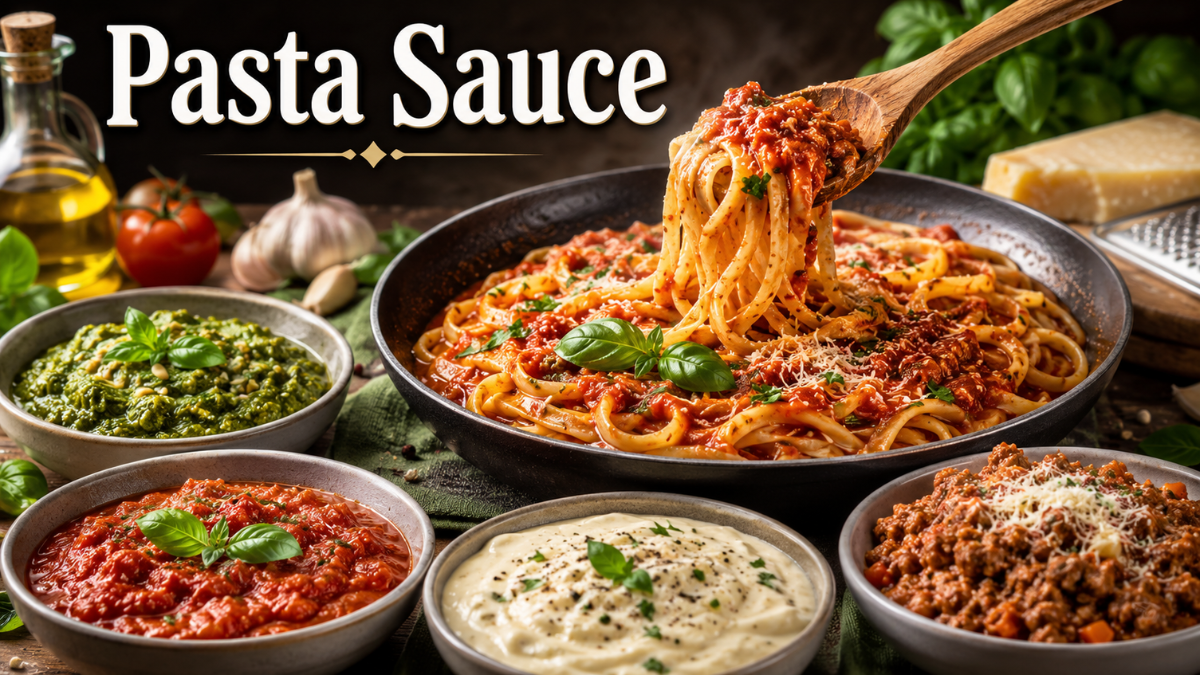
Pasta sauce is the key ingredient that transforms plain pasta into a flavorful meal by adding moisture, texture, and depth. The best pasta sauce depends on your pasta shape, preferred flavor profile, cooking time, and dietary needs.
From simple tomato-based sauces like marinara to rich options like Bolognese and creamy Alfredo, each sauce has a purpose. Understanding how sauces work, how they pair with different pasta shapes, and how to finish pasta properly can improve even a simple weeknight meal.
What Is Pasta Sauce? A Simple Explanation
Pasta sauce is a cooked or prepared mixture of ingredients designed to coat pasta and enhance its flavor. Common ingredients include tomatoes, cream, cheese, herbs, olive oil, garlic, vegetables, and meat.
The main purpose of a sauce is not only to add taste but also to create balance. Pasta provides carbohydrates and structure, while sauce contributes acidity, richness, seasoning, and moisture.
Traditional Italian cuisine includes many sauce styles, from tomato-based sauces such as marinara and ragù to herb-based sauces such as pesto. Modern cooking has expanded these categories with dairy-free, vegan, and quick-preparation alternatives.
A good sauce should complement the pasta rather than overpower it.
Why Pasta Sauce Matters for Flavor and Texture
A common mistake is thinking that any sauce will work with any pasta. In reality, the relationship between pasta shape and sauce texture has a major impact on the final dish.
A thin sauce may work beautifully with long pasta because it coats the strands evenly. A thick meat sauce needs a stronger pasta shape that can hold its weight. Creamy sauces often work better with pasta shapes that provide more surface area.
Texture is also affected by how pasta and sauce are combined. Simply placing cooked pasta on a plate and adding sauce on top often creates uneven flavor distribution. Finishing pasta in a pan with sauce allows starch from the pasta water to help create a smoother coating.
This technique is widely recommended by cooking professionals because it improves consistency and helps the sauce cling to the pasta.
The Main Types of Pasta Sauce Explained
Tomato-Based Pasta Sauces (Rosso)
Tomato-based sauces are among the most popular pasta sauces because they are versatile, affordable, and suitable for many dishes. They range from light and fresh preparations to slow-cooked, rich sauces.
Marinara Sauce
Marinara is a simple tomato pasta sauce made with tomatoes, garlic, herbs, and olive oil. It focuses on fresh flavors rather than long cooking times.
A well-made marinara usually has balanced acidity from tomatoes, aromatic notes from garlic and herbs, and enough olive oil to create a smooth texture.
Marinara works especially well with:
- Spaghetti
- Linguine
- Lasagna
- Baked pasta dishes
It is also commonly used as a pizza base or dipping sauce.
Arrabbiata Sauce
Arrabbiata is a spicy tomato sauce that includes red chili peppers, garlic, tomatoes, and olive oil.
The chili adds heat, while tomatoes provide acidity and balance. Because of its bold flavor, arrabbiata works well with pasta shapes that hold sauce effectively.
Penne is a popular choice because its hollow center and ridges capture the spicy sauce.
Bolognese Sauce
Bolognese is a slow-cooked meat sauce traditionally associated with Italian ragù. It usually includes ground meat, vegetables such as onion and carrot, tomatoes, and cooking liquids.
Unlike a quick tomato sauce, Bolognese develops deeper flavor through longer cooking. The goal is not simply a tomato taste but a rich combination of meat, aromatics, and seasoning.
Because it is heavier, Bolognese pairs well with wider pasta shapes such as tagliatelle or sturdy options like rigatoni.
Vodka Sauce
Vodka sauce combines tomatoes, cream, herbs, and vodka to create a smooth and rich sauce.
The vodka helps release certain flavor compounds during cooking, allowing the tomato and cream flavors to blend more effectively.
It is commonly paired with penne because the creamy sauce coats the short pasta well.
Cream-Based Pasta Sauces
Cream-based sauces provide richness and a smooth texture. They are often chosen for comfort dishes but require careful balance because heavy sauces can easily overpower pasta.
Alfredo Sauce
Traditional Alfredo is associated with butter and Parmesan cheese, while many modern versions include cream.
Its rich texture makes it a popular pairing for fettuccine and other wide pasta shapes.
A well-balanced Alfredo should feel creamy rather than overly heavy. Parmesan cheese, seasoning, and cooking technique determine whether the sauce tastes smooth or excessively rich.
Vegan and Dairy-Free Cream Sauces
Dairy-free cream sauces use ingredients such as cashews, almond milk, vegetables, or nutritional yeast to create richness without traditional dairy products.
Cashew-based sauces are popular because blended nuts create a naturally creamy texture.
These alternatives work well for:
- Vegan meals
- Dairy-free diets
- Lighter versions of traditional creamy dishes
However, they do not exactly replicate the flavor of dairy-based sauces.
Oil-Based and Herb-Based Pasta Sauces
Not all pasta sauces require tomatoes or cream. Some of the most flavorful dishes rely on simple ingredients prepared correctly.
Pesto Sauce
Pesto is an herb-based sauce traditionally made with basil, pine nuts, garlic, Parmesan cheese, and extra virgin olive oil.
Unlike cooked sauces, pesto is usually mixed with warm pasta after cooking to preserve its fresh herbal flavor.
It pairs well with:
- Spaghetti
- Fusilli
- Gnocchi
- Vegetables
Pesto can also be used beyond pasta as a spread or topping.
Garlic and Olive Oil Sauce
Aglio e olio is a simple Italian preparation using garlic, olive oil, chili flakes, and pasta water.
Because it contains few ingredients, quality matters. Good olive oil, properly cooked garlic, and correct seasoning make the difference.
It is one of the fastest pasta options for busy meals.
Brown Butter and Specialty Sauces
Brown butter sauce develops a nutty flavor by gently cooking butter until its milk solids darken.
It works especially well with stuffed pasta such as ravioli because it enhances fillings without covering their flavor.
How to Choose the Right Pasta Sauce for Different Pasta Shapes
The best pasta sauce depends partly on the pasta structure.
Long pasta such as spaghetti and linguine works well with lighter sauces because the sauce can coat the strands evenly.
Short pasta with ridges or hollow centers can hold thicker sauces.
Examples:
Spaghetti pairs well with marinara, garlic oil, and pesto.
Penne works well with vodka sauce and arrabbiata.
Rigatoni is suitable for Bolognese and chunky vegetable sauces.
Ravioli pairs naturally with lighter sauces such as brown butter because the filling remains the main focus.
The goal is balance. The pasta should carry the sauce, not disappear underneath it.
The Right Way to Sauce Pasta for Better Results
Heat the Sauce Before Combining
Warm sauce combines better with freshly cooked pasta. Adding hot pasta to cold sauce can create uneven temperature and texture.
A wide skillet is useful because it provides enough space to toss pasta while allowing the sauce to reduce slightly.
Cook Pasta Al Dente
Al dente means pasta is cooked until it is tender but still has a slight firmness when bitten.
Overcooked pasta becomes soft and may struggle to hold sauce. Undercooked pasta can have a hard center and an incomplete texture.
Cooking pasta in properly salted water creates better flavor from the inside.
Combine Pasta and Sauce in the Skillet
Instead of serving sauce separately, transfer cooked pasta directly into the sauce.
This allows the pasta surface to absorb some flavor while the sauce coats each piece more evenly.
Add Pasta Water for Better Sauce Texture
Pasta water contains starch released during cooking. Adding small amounts helps improve texture by allowing the sauce to bind with pasta.
This process is especially useful for:
- Tomato sauces
- Cream sauces
- Oil-based sauces
The result is a smoother sauce that sticks to the pasta instead of remaining at the bottom of the plate.
Add Fat for Richness and Balance
Butter or extra virgin olive oil can improve mouthfeel and help create a more balanced sauce.
Fat also carries flavor compounds and prevents some sauces from becoming dry or overly thick.
Finish Cooking Until the Sauce Coats the Pasta
The final stage is about adjustment.
If the sauce feels too thick, add more pasta water. If it feels too thin, continue cooking briefly until it reaches the desired consistency.
A properly finished pasta dish should look glossy and evenly coated.
Quick and Easy Pasta Sauce Ideas for Weeknight Meals
A good weeknight pasta sauce does not always require complicated ingredients.
A simple tomato sauce made with tomatoes, garlic, olive oil, and herbs can work for pasta, pizza, and casseroles.
Brown butter balsamic sauce adds richness and pairs well with stuffed pasta and roasted vegetables.
Hemp seed Alfredo provides a plant-based creamy alternative, while cashew Alfredo offers another dairy-free option.
Harissa olive oil sauce creates a spicy Mediterranean-inspired flavor and works well with vegetables.
Tuscan pumpkin sauce combines pumpkin, herbs, and creamy ingredients for a seasonal meal.
Red pesto adds sun-dried tomato flavor, while lemon almond sauce provides a lighter option with fresh acidity.
Common Pasta Sauce Mistakes and How to Avoid Them
Even a good recipe can fail if the technique is wrong.
Common mistakes include:
Using oil on cooked pasta before adding sauce. This creates a barrier that prevents sauce from sticking.
Using the wrong pasta shape. A thin sauce may struggle with large pasta shapes, while heavy sauces can overwhelm delicate pasta.
Skipping pasta water. Without starch, many sauces lack the texture needed to coat pasta properly.
Adding too much sauce. Pasta should be coated, not buried.
Overcooking pasta before finishing it in sauce. Pasta continues cooking during the final mixing stage.
Pasta Sauce vs Pasta Toppings
Sauce creates the foundation of the dish, while toppings provide finishing touches.
Cheese, herbs, toasted nuts, chili oil, and fresh vegetables can enhance pasta, but they cannot replace a balanced sauce.
Some simple pasta dishes benefit from minimal additions, while richer sauces may need fresh herbs or acidity to prevent heaviness.
How to Store and Reheat Pasta Sauce Properly
Most homemade sauces can be stored in airtight containers in the refrigerator for several days.
Tomato-based sauces usually freeze well because their structure remains stable after thawing.
Cream-based sauces require more attention because they can separate during reheating. Gentle warming and stirring help maintain a smoother texture.
For meal preparation, storing sauce separately from pasta often produces better results because pasta can become softer after freezing and reheating.
Homemade Pasta Sauce vs Store-Bought Sauce
Homemade pasta sauce offers greater control over ingredients, seasoning, and texture.
It is useful when:
- You want customization.
- You prefer fresh ingredients.
- You enjoy cooking from scratch.
Store-bought sauces offer convenience and consistency.
They are useful when:
- You need a quick meal.
- You have limited preparation time.
- You want a reliable base recipe.
A practical approach is combining both options. A quality packaged sauce can often be improved with fresh garlic, herbs, olive oil, cheese, or proper finishing techniques.
How to Match Pasta Sauce With Different Dietary Preferences
Vegetarian Pasta Sauces
Vegetarian options include marinara, pesto, mushroom sauces, and vegetable-based sauces.
Vegan Pasta Sauces
Vegan sauces often use nuts, vegetables, herbs, and plant-based ingredients to create flavor and texture.
High-Protein Pasta Sauce Options
Protein can come from meat sauces, lentils, beans, mushrooms, or other nutrient-rich ingredients.
Low-Calorie Pasta Sauce Choices
Tomato-based sauces and vegetable-heavy options are often lighter choices compared with cream-based alternatives.
However, portion size and overall ingredients matter more than choosing a single “healthy” sauce.
Choosing and Using Pasta Sauce Correctly
The best pasta sauce is the one that matches your pasta shape, cooking goal, and flavor preference. Tomato sauces provide freshness and acidity, cream sauces offer richness, pesto adds herbal brightness, and meat sauces create deeper flavors.
For better results, warm your sauce, cook pasta al dente, finish pasta in the skillet, and use pasta water to improve texture. Whether you make sauce from scratch or improve a store-bought option, the right technique can turn a basic pasta dish into a much better meal.
You May Also Like Annaliese Witschak
FAQs
What Is the Most Popular Pasta Sauce?
Tomato-based sauces such as marinara are among the most popular because they are versatile and work with many pasta dishes.
What Pasta Sauce Goes Best With Spaghetti?
Spaghetti pairs well with marinara, pesto, garlic and olive oil sauces, and lighter tomato-based sauces.
Can You Freeze Homemade Pasta Sauce?
Yes. Tomato-based sauces generally freeze well. Cream sauces may require more careful reheating because separation can occur.
How Much Pasta Sauce Should You Use Per Serving?
Use enough sauce to coat the pasta evenly without covering the pasta completely. The ideal amount depends on sauce thickness and pasta shape.
Should Pasta Sauce Be Cooked Before Adding Pasta?
Usually yes. Warm sauce combines better with pasta and improves texture.
Why Add Pasta Water to Sauce?
Pasta water contains starch that helps sauces become smoother and stick better to noodles.
What Is the Difference Between Marinara and Bolognese Sauce?
Marinara is a simple tomato sauce, while Bolognese is a richer slow-cooked meat-based sauce.

Wyvernity Team is a content writing team with 3 years of experience in creating clear, engaging, and SEO-friendly content for Wyvernity.com.