
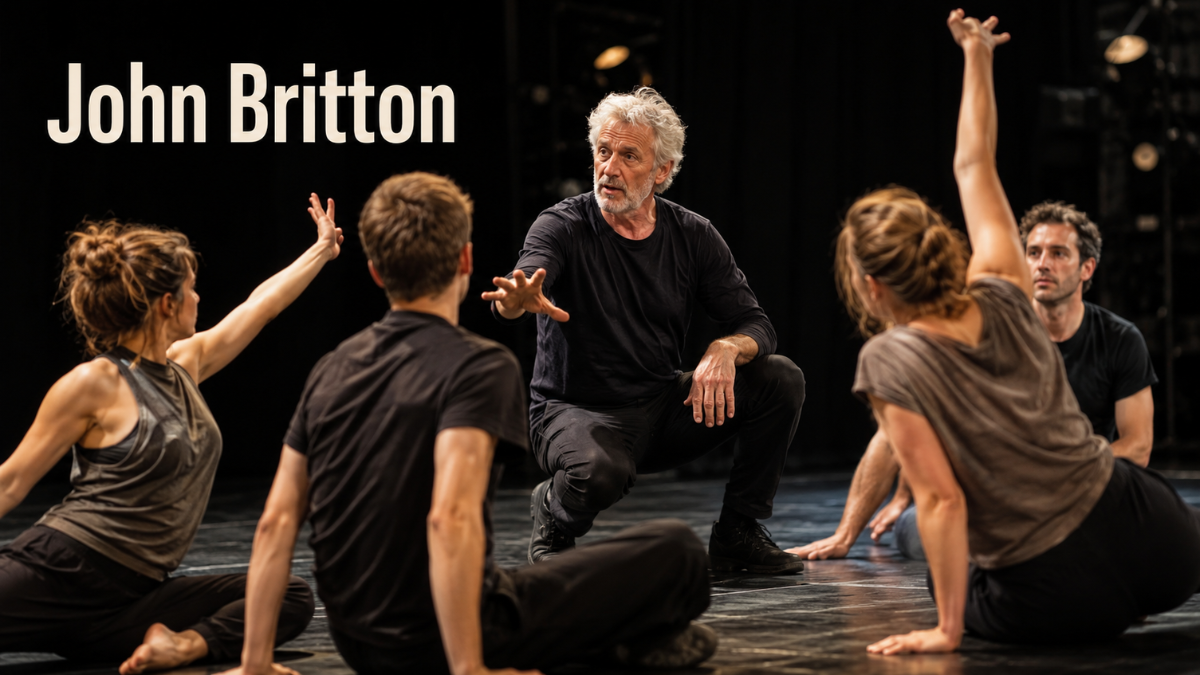
John Britton: Biography, Career, and Contribution to Theatre
John Britton is a British theatre director, writer, performer, improviser, and educator recognised for his work in ensemble physical theatre and as the founder of DUENDE, an international performance collaboration focused on collective creation and performer development.
The name John Britton can refer to several historical and contemporary figures, including a Negro League baseball player and other professionals in different fields. This article focuses on John Britton the theatre practitioner, whose career has centred on physical performance, ensemble training, international theatre collaboration, and developing new approaches to performer presence.
Through directing, teaching, and writing, John Britton has contributed to contemporary theatre education by exploring how performers can create meaningful work through collaboration, movement, improvisation, and shared responsibility.
What Is John Britton Known For?
John Britton as a Theatre Director, Writer, and Performer
John Britton built his career as a multidisciplinary theatre practitioner rather than limiting himself to one performance style. His work includes directing theatre productions, writing for stage and radio, performing, improvising, and training performers.
His primary area of expertise is ensemble physical theatre, a form of performance where actors work collectively through movement, awareness, improvisation, and interaction. Instead of treating performers as separate individuals who simply deliver scripted material, this approach explores how a group can create together.
Britton’s career reflects a combination of artistic practice and education. He has worked with professional performers, theatre students, cultural organisations, and international performance groups across multiple continents.
The Foundation of DUENDE and Ensemble Physical Theatre
A major part of John Britton’s legacy is DUENDE, an international collaboration of performers dedicated to ensemble principles.
DUENDE explores how performers can develop stronger creative relationships through shared practice. The organisation focuses on physical theatre, improvisation, and collaborative performance-making.
In 2015, Britton founded The DUENDE School of Ensemble Physical Theatre, a training initiative designed for physical performers. The school is based on the concept of “Self-With-Others,” which describes the balance between individual creativity and connection with an ensemble.
The approach does not remove individuality from performance. Instead, it encourages performers to understand how their personal choices contribute to a larger creative system.
Early Life, Education, and Professional Development of John Britton
John Britton’s Academic Background
John Britton’s academic journey began with a degree in English Language and Literature from the University of Hull in the United Kingdom. He later completed an MA in Theatre Studies at Leeds University.
This combination of literary study and theatre research helped shape his understanding of both storytelling and performance practice.
Rather than following a single traditional route into theatre, Britton developed a broad perspective that combined analysis, performance, directing, and experimentation.
The First Years of His Theatre Career
For the first fifteen years of his professional career, Britton worked as a freelance artist in the United Kingdom and Australia.
During this period, he gained experience across different creative fields, including theatre, dance, opera, live art, and interdisciplinary performance.
This varied background became important in developing his later approach. His work moved beyond conventional theatre production toward exploring how performers learn, collaborate, and create.
How John Britton Developed His Theatre Training Philosophy
The Philosophy Behind Ensemble Physical Theatre
John Britton’s performance philosophy is built around the idea that theatre is created through relationships.
Key elements of ensemble physical theatre include:
- Physical awareness between performers
- Improvisation and responsiveness
- Collective creativity
- Trust and communication
- Shared artistic responsibility
The goal is not simply for performers to improve individual skills but to develop awareness of how their actions influence others on stage.
This makes ensemble training particularly valuable for groups interested in experimental theatre, movement-based performance, and collaborative creation.
What Makes John Britton’s Training Methods Different?
A defining feature of Britton’s approach is the focus on practical exploration. Performers learn through doing, observing, responding, and experimenting.
His workshops often move away from purely theoretical instruction and instead involve exercises that develop presence, connection, and creative decision-making.
However, ensemble-based training also has limitations. It requires patience, trust, and commitment from participants. Groups expecting immediate results may struggle because strong ensemble relationships usually develop through repeated practice.
John Britton’s Major Directing and Performance Works
International Theatre Productions Directed by John Britton
John Britton has directed productions across different countries and artistic environments.
His directing work includes:
- Rapid-I-Movement for Madman and Me in Mumbai
- The Hour of the Mayfly for DUENDE in Athens
- Macbeth at the National School of Drama in India
- Ode with Nike Imoru in Seattle
- Jerk for ESP in Australia
- Finding the Silence with Casus Circus
- Life Story with Padatik Theatre in Kolkata
- Seven Petticoats
- Pulsar
- The Shattering Man
- Echo Chamber
These productions demonstrate his interest in combining physical expression, storytelling, improvisation, and international collaboration.
John Britton’s Work Across Different Art Forms
Britton’s creative work extends across multiple performance disciplines, including:
- Theatre
- Dance
- Opera
- Radio performance
- Youth theatre
- Live art
- Circus collaboration
- Site-specific performance
- Interdisciplinary projects
This range has allowed him to develop a flexible understanding of how performance can be created in different contexts.
John Britton and DUENDE: Global Ensemble Performance
The Mission and Vision of DUENDE
DUENDE represents John Britton’s long-term interest in ensemble-based performance.
The organisation brings together performers from different backgrounds to explore collaboration, physical theatre, and creative exchange.
Rather than focusing only on final performances, DUENDE also values the creative process itself. The relationships formed during development become part of the artistic work.
Collision: Improvised Encounters Around the World
One of DUENDE’s continuing projects is Collision, a series of improvised encounters between DUENDE performers and local artists.
These events create temporary ensembles where performers from different cultures and disciplines work together through improvisation.
The project reflects one of Britton’s central ideas: meaningful performance can emerge when artists listen, respond, and create collectively.
John Britton’s International Teaching and Workshops
Countries and Institutions Where John Britton Has Worked
John Britton has delivered workshops and performance training programmes internationally, including work in:
- United Kingdom
- Australia
- India
- Greece
- Sweden
- Singapore
- Mexico
- Colombia
- Portugal
- France
- Germany
- United States
His international work demonstrates how ensemble principles can adapt across different cultural and artistic environments.
Examples of Performer Training Programmes
Britton has worked with organisations and institutions including:
- National School of Drama, Delhi
- Swedish Ballet Academy
- National Institute of Circus Arts, Melbourne
- Universities
- Theatre companies
- Independent performance organisations
His teaching focuses on performer development, physical awareness, improvisation, and collaborative creation.
John Britton’s Books and Contribution to Theatre Knowledge
Encountering Ensemble: Understanding Collective Performance
John Britton’s book Encountering Ensemble, published by Methuen/Bloomsbury in 2013, explores historical and contemporary approaches to ensemble performance.
The book provides insight into how groups create theatre through shared processes rather than relying only on individual performance.
It has become an important resource for people studying ensemble practices and contemporary theatre methods.
Climbing The Mountain: The Performer’s Journey Into Presence
Published in 2017 by Leonora Press, Climbing The Mountain: The Performer’s Journey Into Presence examines ideas related to performer awareness, development, and presence.
Together, Britton’s books document practical knowledge developed through decades of theatre practice.
What Is Ensemble Physical Theatre and Why Does It Matter?
Core Principles of Ensemble Performance
Ensemble physical theatre focuses on the connection between performers.
Its core principles include:
- Collaboration
- Movement-based expression
- Improvisation
- Group awareness
- Shared creative ownership
The approach is especially useful for performers interested in experimental theatre, contemporary performance, and collaborative artistic processes.
How John Britton Influenced Modern Performance Training
John Britton’s influence comes through his workshops, publications, performances, and the development of DUENDE.
His work has encouraged performers and educators to consider theatre not only as individual expression but as a collective practice built through communication and connection.
John Britton’s Academic Career at the University of Huddersfield
Senior Lecturer and MA Ensemble Physical Theatre Leadership
In 2004, John Britton became Senior Lecturer at the University of Huddersfield.
In 2007, he became Course Leader of the MA Ensemble Physical Theatre: Training & Performance programme.
This role allowed him to contribute directly to advanced performer education and formal theatre training.
Returning to Freelance Creative Work
In 2013, Britton left the university environment and returned to freelance creative work.
He continued directing, teaching, and developing international theatre projects through DUENDE and other collaborations.
John Britton Compared With Traditional Theatre Training
Ensemble Physical Theatre vs Traditional Theatre Approaches
Traditional theatre training often focuses on individual acting skills, character interpretation, and script analysis.
Ensemble physical theatre adds another layer by focusing on:
- Group relationships
- Physical communication
- Improvisation
- Collective storytelling
Neither method is universally superior. Traditional approaches remain valuable for many theatrical forms, while ensemble methods are particularly effective for collaborative and experimental performance.
Other Famous People Named John Britton
John “Jack” Britton the Baseball Player
John “Jack” Britton was an American Negro League baseball player who competed professionally in the United States, Mexico, Canada, and Japan.
He became one of the early African American players connected with Japanese professional baseball.
John Britten: The New Zealand Motorcycle Engineer
John Britten was a New Zealand mechanical engineer known for creating the innovative Britten V1000 racing motorcycle.
John Britton, the English Antiquarian
John Britton (1771–1857) was an English antiquarian and author recognised for documenting British architecture and historic sites.
Dr. John Britton: American Physician
Dr. John Britton was an American physician whose life became associated with debates and violence surrounding abortion access in the United States.
John Britton’s Legacy in Theatre and Performance
Influence on Future Generations of Performers
John Britton’s contribution is not limited to the productions he directed. His wider influence comes from developing training methods that encourage performers to work together creatively.
Through DUENDE, teaching, and publications, he has helped preserve and expand interest in ensemble performance.
Why John Britton’s Work Still Matters Today
Contemporary theatre increasingly values collaboration, interdisciplinary work, and creative flexibility.
John Britton’s methods remain relevant because they address a central challenge of performance: how individuals can create something stronger through meaningful cooperation.
John Britton’s Career and Achievements
John Britton is a British theatre practitioner recognised for his work as a director, performer, educator, and founder of DUENDE.
His career includes:
- Ensemble physical theatre development
- International directing projects
- Performer training programmes
- Theatre research publications
- Global creative collaborations
Actionable Next Steps for Readers Interested in John Britton’s Work
Readers interested in John Britton’s methods can explore his books, study ensemble theatre practices, attend physical theatre workshops, and research DUENDE projects.
For theatre students, performers, and educators, his work offers a practical framework for understanding how collaboration, presence, and shared creativity can shape modern performance.
Conclusion
John Britton’s legacy comes from combining theatre creation with performer education. Through DUENDE, international workshops, directing projects, and books such as Encountering Ensemble, he has contributed to a deeper understanding of collaborative performance.
Those exploring contemporary theatre can view his work as a guide to developing stronger creative relationships, especially when performance depends on trust, physical awareness, and collective imagination.
You May Also Like Amy Sherrill
FAQs
Who is John Britton?
John Britton is a British theatre director, writer, performer, improviser, and educator known for ensemble physical theatre and founding DUENDE.
What is John Britton famous for?
He is known for developing ensemble performance approaches, directing international productions, teaching performers, and writing about theatre practice.
What is DUENDE founded by John Britton?
DUENDE is an international performance collaboration focused on ensemble principles, physical theatre, and collective creation.
What books has John Britton written?
His major theatre books are Encountering Ensemble and Climbing The Mountain: The Performer’s Journey Into Presence.
Where has John Britton taught theatre?
He has conducted workshops and residencies across Europe, Asia, Australia, and North America.

Wyvernity Team is a content writing team with 3 years of experience in creating clear, engaging, and SEO-friendly content for Wyvernity.com.